

Forging Pathways to a Just Future.

We support and sustain a community of scholars, students, and engaged partners who generate and act upon visions of just futures, where all people can thrive.
We bring together people, knowledge, and action to forge paths to a transformed future.
We have three core strategies for achieving our mission

Cultivate communities of learning

Support innovative research, performance, and art
Catalyze action
Cultivate communities of learning
We create transformative educational opportunities that foster dialogue and deepen connections between faculty, students, postdocs, and community members working in the area of racial justice.
Support innovative research, performance, and art
Support innovative research, performance, and art across disciplines to develop knowledge and produce ideas about race, racism, and reinforcing dimensions of inequality.
Catalyze action
Catalyze action that carries impact beyond Cornell and is responsive to the challenges and opportunities identified through research, practice, and community partnership.
Who We Are
We focus on learning, knowing, and doing. Researchers at the center conduct research and deploy what we learn to create change in communities. We work collaboratively, guided by a grounded and strategic vision of how social change is achieved.
Our Programs
The Center for Racial Justice and Equitable Futures bridges research and action to advance positive change. We bring together researchers, organizations, and communities to co-develop knowledge that equips ordinary people to forge paths toward a more just world.
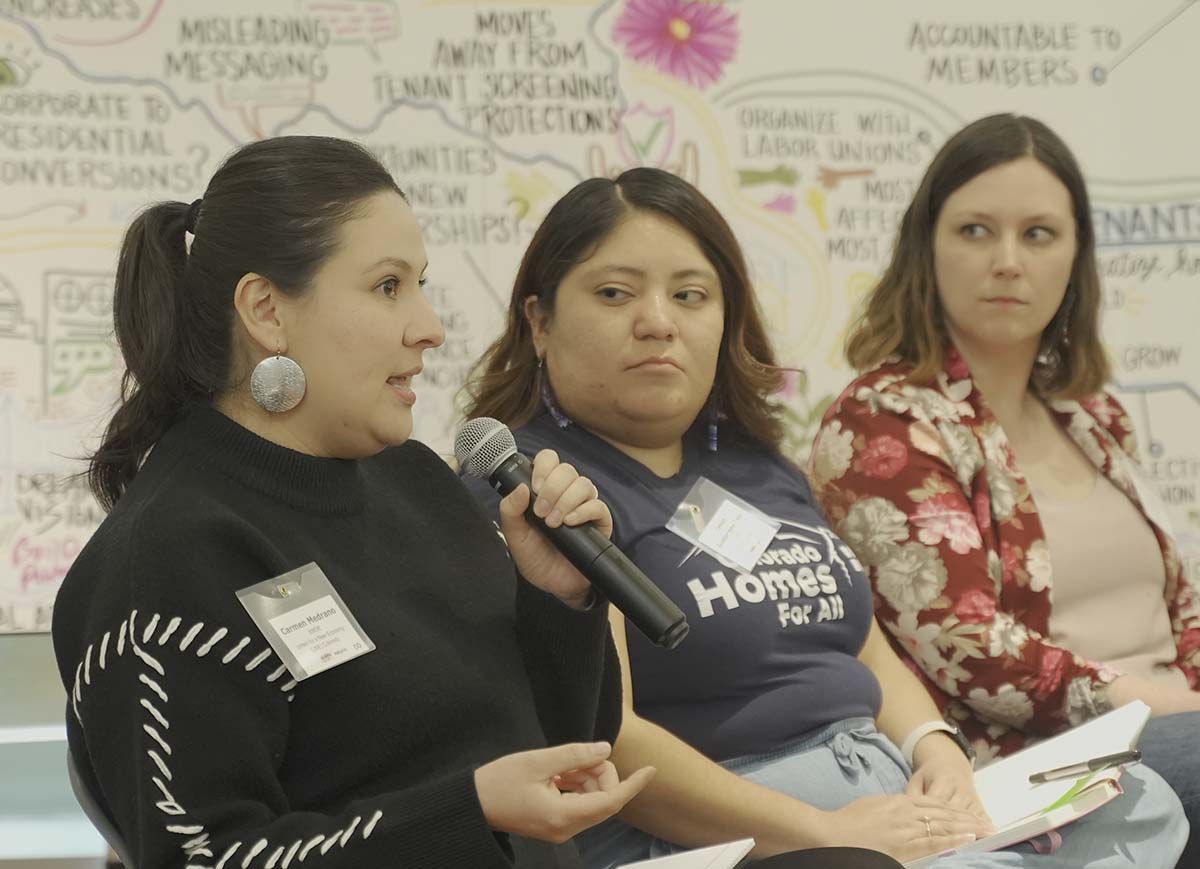
Collaborating with partners allows for tangible community impact.
Futures We Support
In order to build a durable foundation for the work of advancing racial justice, strategic collaboration is a must. We foster partnerships between researchers and social change organizations that seed ideas, co-produce research, and apply knowledge in rigorous and meaningful ways. Our programs and partnerships emphasize interdependence and organizing as paths toward narrative shifts, powerbuilding, and social change.
Our work has, by design, tangible impact beyond Cornell, responding to the challenges identified through research and in partnerships.
News
The Healthy Project Podcast: Neil Lewis, Jr. and Sarah Gollust discuss communicating public health & health equity
The Healthy Project podcast recently featured Neil Lewis Jr. and Sarah Gollust, researchers with the Collaborative on Media and Messaging for Health and Social Policy (COMM), to discuss health inequity, the imperative for effective public health messaging, and communication strategies to help mitigate health disparities.
Mapping the Landscape of State Medicaid Policy
Grace Beals, a graduate research assistant at the Center and part of our inaugural cohort of student fellows in 2024–25; Marissa Rivera, a recipient of a 2025–26 graduate student research grant; and Jamila Michener, director at the Center, find that states have largely been advancing expansionary Medicaid policy, and, crucially, that when states propose Medicaid policy specifically related to advancing equity, those policies are as likely to pass as other non-equity related policy. This means that equity-focused policy is no more politically infeasible than other kinds of policy.
Tenant Organizing as a Pathway to Decoupling Wealth and Power
In a new report, Yusra Murad, a researcher and organizer, and Jamila Michener, director of the Center, show how the tenant organizing movement is building collective power among tenants and disrupting assumptions about the racial wealth gap by shifting narratives to decouple property ownership and power.
Center for Racial Justice and Equitable Futures names 2026 faculty fellows
Five faculty fellows from across three colleges and five departments will receive dedicated support and funding from the Center to pursue innovative and creative projects that stem from faculty research and teaching, and which connect to the mission of the Center to create more just and equitable futures.
How People Make Meaning in a Fragmented Democracy
In this article, Neil Lewis, Jr., associate director at the Center, raises questions about the utility of aggregating poll data for policymaking, given what social and behavioral scientists have learned about the fragmentation of (American) democracy and its implications for heterogeneity in people's experiences.
Preemption and Democracy: Lessons from Minnesota
Jamila Michener, director at the Center, takes a close look at Minnesota through the lens of "preemption"—both harmful and positive—to understand ways that state and local governments can cultivate grassroots power to protect against democratic erosion in times of authoritarian governance.
Events
Summer Series Luncheons
Support Us
Your action makes a difference!
The research, learning, and action we undertake at RJEF require significant resources. Supporting RJEF is one way you can help to advance our mission.