Our Partners
In order to build a durable foundation for the work of advancing racial justice, strategic collaboration is a must. We collaborate with partners to identify and study challenges to ensure our work has tangible impacts beyond Cornell.
We foster partnerships between researchers and social change organizations that seed ideas, co-produce research, and apply knowledge in rigorous and meaningful ways.
Our programs and partnerships emphasize interdependence and organizing as paths toward narrative shifts, powerbuilding, and social change.
HouseUS
HouseUS is a pooled fund dedicated to supporting tenant organizing and tenant power.
Working at the federal, state, and local levels, HouseUS grantees and partners are building a multi-racial, working-class, geographically diverse movement to grow the power of tenants and fight for racial, economic, and housing justice. We know that simply building more affordable housing alone has not—and will not—solve the housing crisis.
As a funder, strategic partner, and campaign hub, HouseUS has become a key mover within philanthropy for tenant power. An important part of this work is our ability to strengthen the field by convening local tenant organizations, state coalitions, and federal housing campaigns. We currently fund in fifteen states and nationally.
Compassionate Release Project
 Advocating for compassionate release of prisoners serving extreme sentences in federal prison.
In the US, more than 200,000 people are serving life or virtual life sentences (at least 50 years) in prison. They represent one in seven of those imprisoned—highlighting mass incarceration as an urgent civil rights challenge. Joseph Margulies is tackling this issue in partnership with FAMM – Families for Justice Reform in Washington, DC. Dedicated to ending extreme sentencing, the national organization identifies clients for the project.
Undergraduates work closely with Margulies and other lawyers handling these cases pro bono. Supported by an Engaged Opportunity Grant, team members gather records and supporting documents, travel to federal prisons for interviews, track down and interview witnesses, and help draft pleadings. The goal is to craft a nuanced and compassionate account of the client’s life history to make the case before a federal judge that the sentence should be reduced for “extraordinary and compelling” reasons. Students learn not only cultural humility, sensitive listening, and insights into the law but also that “There is no them, there is only us.”

- Joseph Margulies, Department of Government, College of Arts & Sciences, Cornell University
- Community Partner: FAMM – Families for Justice Reform
Freedom on the Move
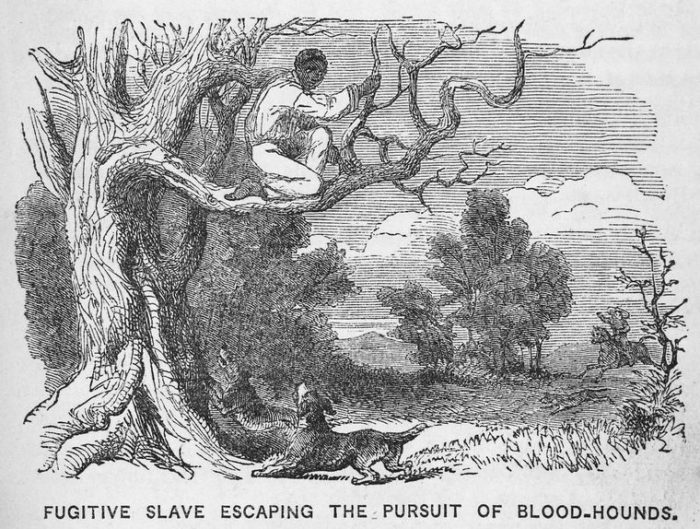
Freedom on the Move is a database of fugitives from North American slavery. With the advent of newspapers in the American colonies, enslavers posted “runaway ads” to try to locate fugitives. Additionally, jailers posted ads describing people they had apprehended in search of the enslavers who claimed the fugitives as property.
Created to control the movement of enslaved people, these ads ultimately preserved the details of individual lives—their personality, appearance, and life story. Taken collectively, the ads constitute a detailed, concise, and rare source of information about the experiences of enslaved people.
We are compiling thousands of stories of resistance that have never been accessible in one place. After initial curation, the ads become available for crowdsourcing. The crowdsourcing process populates a full-text transcription and additional searchable metadata within the database.
Freedom on the Move serves as a research aid, a pedagogical tool, and a resource for genealogists. Scholars, students, and citizen historians will be able to use the data produced from the ads in new and creative ways.