Resources
Since racism operates through and with other systems of oppression, achieving racial justice necessitates a collaborative, inclusive approach with a focus on social transformation that benefits people from all backgrounds.
Below are resources that begin to collate shared knowledge, work toward creating communal understanding of definitions we use in our work and research, and disseminate research from our institution and our partners.
Futures Forum
Who Is Indigenous? An Experiential Reckoning on Identity and Belonging Beyond Imposed Boundaries
In February, postdoctoral fellow Leonard Mukosi convened in Addis Ababa, Ethiopia, with Indigenous representatives from twenty-three countries to reassess Africa’s formal position on the question: who is Indigenous? Reflecting on his own family's experiences, Dr. Mukosi shares notes from the field and makes a compelling case for what he terms "Global Indigeneity."
Reading the Past to Write a Better Future: On Public Scholarship with Victor Ray
Victor Ray is a public scholar thinking and writing on issues of racial justice in the United States. On this episode of Futures Forum, we talk with Ray about his deep knowledge of the civil rights movement, the current turn toward resegregation in the United States, and why the backlash against DEI may have lasting ramifications well beyond the current moment.
Forging the Future of Equitable Housing through Tenant Power
Following the Tenant Power + Policy conference hosted by the Center for Racial Justice and Equitable Futures and HouseUS, research support specialist Jillian Morley assesses the rise of the landlord class and how tenant movements building and wielding power in response, concluding with ways organizers, researchers, and everyday tenants can get involved.
The History of Black Women at Cornell: A Conversation with Marcia Easley
On this episode of Futures Forum, we talk with Marcia Easley, a long-time Ithacan and Assistant Dean for Human Resources in the College of Human Ecology at Cornell University, about the contributions of Black women at Cornell, cycles of progress and backlash, and what is—and isn’t—promised in Ezra Cornell’s founding principle “... any person ... any study.”
How Race Was Constructed to Undermine Solidarity: The Political Construction of Whiteness and the Incentives of Division
Beginning with the formalization of racial stratification, Kyri Murdough maps the course of systemic racism, demonstrating how difference was codified and exploited to hinder solidarity. If racial hierarchy is meant to divide, she argues, building solidarity is an act of resistance.
A Conversation with Keisha Blain
Jamila Michener and Neil Lewis, Jr. speak with Dr. Keisha N. Blain about the process of writing her new book, Without Fear: Black Women and the Making of Human Rights. Dr. Blain, best-selling author and Professor of Africana Studies and History at Brown University, was the Black History Month Keynote Speaker for the Center for Racial Justice and Equitable Futures in February 2026.
Our Guiding Stars: Racial Justice and Equitable Futures
Integrating historical texts, printmaking, and research methodologies, Carolyn Fan presents linocuts based on interviews with the Center's staff on quotes that inspire and motivate them to work towards racial justice and equitable futures.
Introducing the Futures Forum: A Place to Envision Equitable and Just Futures
In a time of deep inequality and uncertainty, imagining equitable and just futures is both urgent and unfinished work. This post introduces the Futures Forum, a new space created by the Center for Racial Justice and Equitable Futures at Cornell University to cultivate collective vision, creativity, dialogue, and hope for transformed futures.
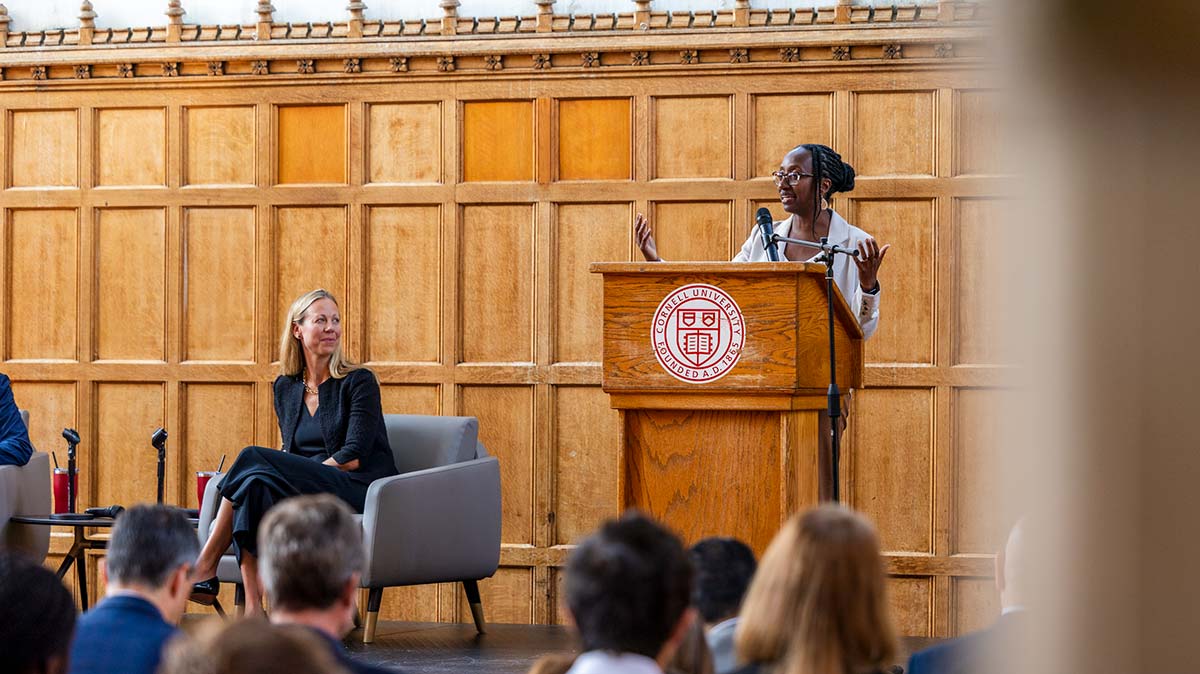
Jamila Michener speaks at an event hosted by the Center for Global Democracy
Race
Further Reading
Structural Racism
“Structural racism is a multilevel, multifaceted, and relational system of oppression that subordinates people of color and elevates whites; this relational subordination is often institutionalized through widely shared customs, organizational rules, and laws, conferring group-based advantages and disadvantages and reproduced through collective actions grounded in shared ideas about group-based hierarchies.”2
Further Reading
Equality vs. Equity
Equality means that “everyone gets the same—regardless of if it’s needed or right for them” while equity means “everyone gets what they need—understanding the barriers, circumstances, and conditions.”2
Further Reading
Racial Justice
Racial justice can also be defined as, “The systematic fair treatment” of all people… “It is not just the absence of discrimination and inequities but also the presence of deliberate systems and supports to achieve and sustain racial equity through proactive and preventative measures.”2
Racial justice is a widely used term, but precise definitions are infrequent, making it unclear what kind of consensus exists for “what racial justice means, what it would look like if it were achieved, and what it cannot address.” The complexities and limits of racial justice as a concept are worth acknowledging and exploring.3
Further Reading
Health Equity
“Health equity means that everyone has a fair and just opportunity to be as healthy as possible. Achieving this requires removing obstacles to health such as poverty and discrimination and their consequences, which include powerlessness and lack of access to good jobs with fair pay; quality education, housing, and health care; and safe environments.”1
Further Reading
Health Justice
Further Reading
Racial Equity and Policy (REAP) framework
Further Reading
Futures Studies
Futures Studies can be defined as “the systematic study of possible, probable and preferable futures including the worldviews and myths that underlie each Future.”1
The World Futures Studies Federation defines Futures Studies as “an art and a science with a strong emphasis on imagination and creativity in creating different possible futures” and emphasizes the importance of using the plural form of the word “futures” in order to counteract the perception that there is one set future, rather than a set of preferred or desirable futures that can be developed in the present moment.2
Further Reading
Power Building
Or “means cultivating the political capacity of people with the most at stake, those who are disproportionately harmed…three reinforcing mechanisms for building power among such heterogenous groups: 1) community organizing; 2) coalition and social movement seeding and development; and 3) strategic institutional negotiation.”4
Community-Based Research
Further Reading
Participatory Action Research
Further Reading
Resources for Learning More

Woods Fund Chicago
Definitions of key terms offered for clarity and shared understanding in the work to fight the brutality of structural racism and economic injustice.
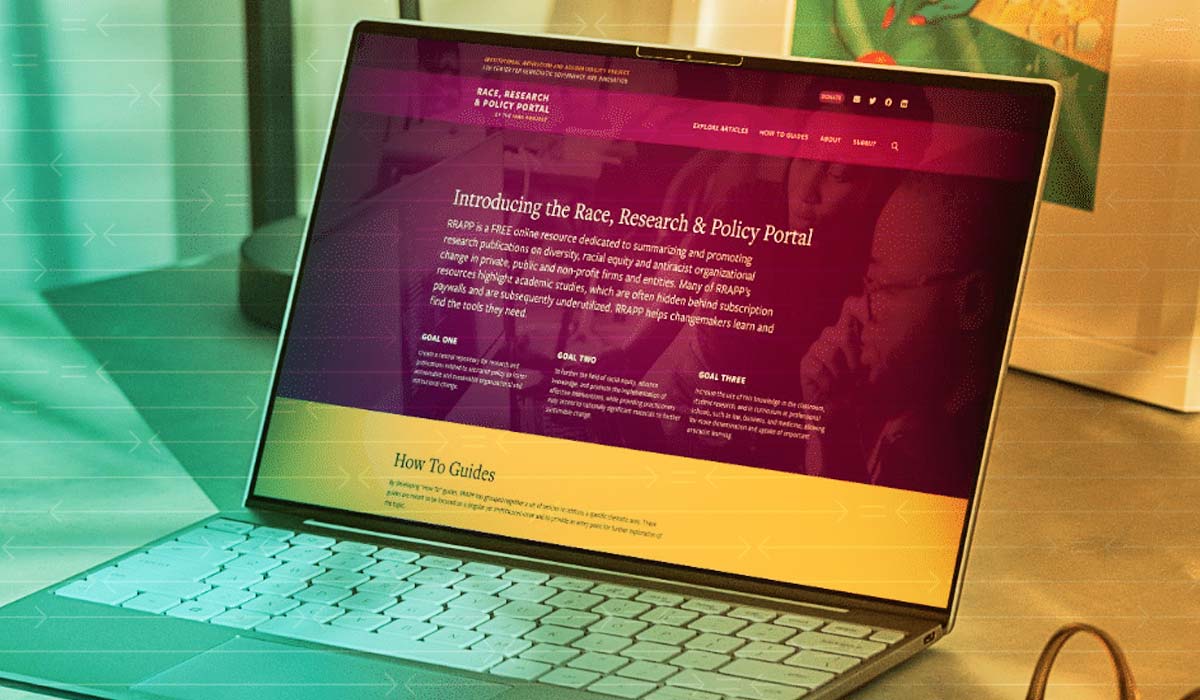
Race, Research, and Policy Portal
A free collection of summaries of the latest antiracist research from the Institutional Antiracism and Accountability Project (IARA) at Princeton University.
Race Forward
Definitions, comparisons, and examples of common race-related terms and concepts.
What Is Health Equity?
A report from the Robert Wood Johnson Foundation designed to increase consensus around meaning of health equity.
The New York City Commission on Human Rights’ Antiracist Resource Guide
A set of antiracism resources (books, articles, videos, documentaries, podcasts and links to organizations) to foster critical engagement and dialogue regarding historical and contemporary manifestations of bias, racism, and discrimination.
National Collaborating Centre for Determinants of Health Resource Library
An archive of publications related to the intersecting issues around race, community, and health.
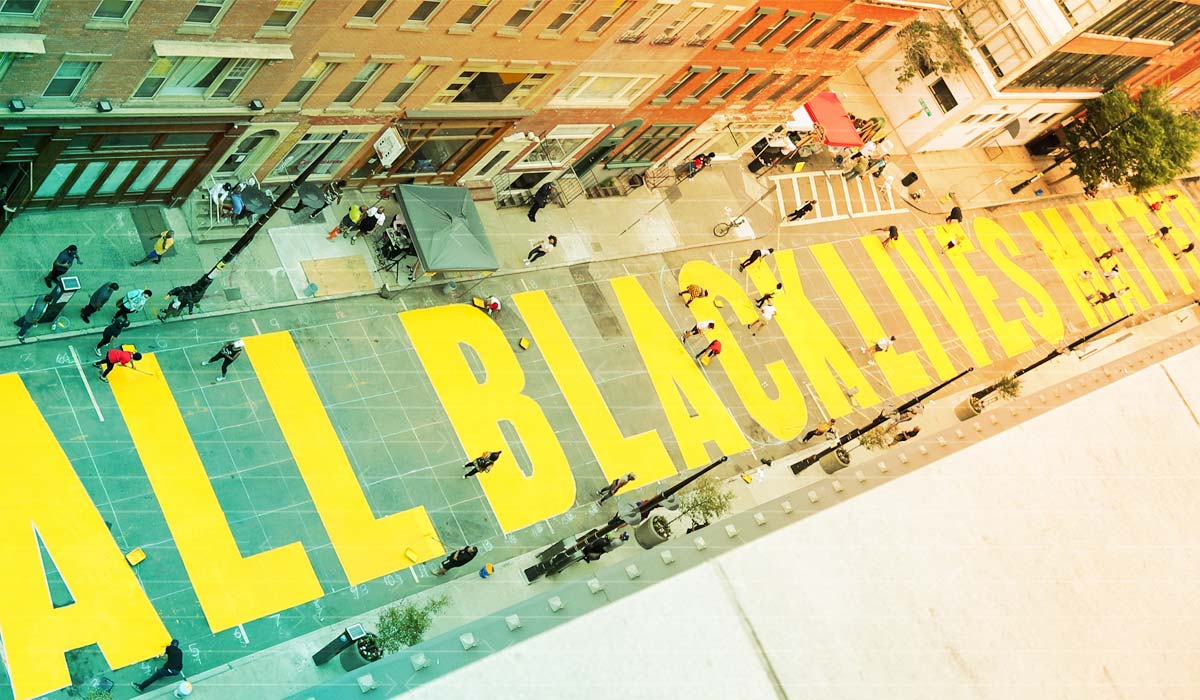
Anti-Racism Resources
Resources and tools from Rutgers University to help equip the community with the knowledge and experience to recognize and combat racial injustice and inequality.
Racial Equity Tools
A library of 5,000+ resources (videos, podcasts, websites, texts, case studies, toolkits, worksheets, and more) to support everyone working to achieve racial equity.
Racial and Social Justice Resources
A resource list from Cornell’s Department of Performing and Media Arts with an emphasis on work in the arts and humanities.
Showing Up for Racial Justice Resource Page
Past webinars, toolkits, and resources from Showing Up for Racial Justice (SURJ), a national organization that brings hundreds of thousands of white people into fights for racial and economic justice.

Equal Justice Initiative
The Community Remembrance Project empowers communities to change the physical landscape to honestly reflect our history.
Racial Equity Index (National Equity Atlas)
The Racial Equity Index is a data tool designed to help communities identify priority areas for advancing racial equity, track progress over time, and set specific goals for closing racial gaps.