
by Marcia Easley, Jamila Michener & Neil Lewis, Jr.
On our last episode, we spoke with Keisha Blain about the history of Black women and their fight for human rights. But what about the history of Black women at Cornell? On this episode of Futures Forum, we talk with Marcia Easley, a long-time Ithacan and Assistant Dean for Human Resources in the College of Human Ecology at Cornell University, about the contributions of Black women at Cornell, cycles of progress and backlash, and what is—and isn’t—promised in Ezra Cornell’s founding principle “… any person … any study.”
Links to further reading from our discussion
- We discussed Black women and human rights in February with Keisha Blain
- Letters to and from Livingston Farrand, Cornell’s president from 1921–1937
- In 1969, Black students at Cornell took over Willard Straight Hall
- Jane Eleanor Datcher was the first known Black woman to earn an undergraduate degree from Cornell
- Residency at Sage College wasn’t always offered to all
- Portrait of Ruth Peyton, Class of 1931
- A historian reflects on Black students as “part and apart” at Cornell
- The political construction of systemic racism informs institutional decisions
- Neil Lewis, Jr. researches how people make meaning in a fragmented democracy and Jamila Michener wrote a book on those consequences for democracy
- Black women have been experiencing massive unemployment rates, and particularly in 2025
Audio transcript
Intro: This is the Futures Forum podcast. A production of the Center for Racial Justice and Equitable Futures at Cornell University. Find us online at equitablefutures.cornell.edu.
JAMILA MICHENER: Hello listeners. I’m Jamila Michener, director of the Center for Racial Justice and Equitable Futures, and professor of Government and Public Policy at Cornell University.
NEIL LEWIS, JR: And I’m Neil Lewis, Jr., associate director at the Center, and associate professor of Communication and Public Policy at Cornell.
JAMILA: Welcome back to the Futures Forum podcast! Futures Forum is a multimodal space for collectively dreaming, imagining, and co-creating ideas. We offer written pieces, visual art, podcasts like this one, and more. In recognition of Women’s History Month, today’s podcast features Marcia Easley, assistant dean for human resources at the College of Human Ecology at Cornell University. From her experience as a long-time Ithacan, to her time at Cornell as an undergraduate student, to her current role, Marcia has a deeply informed view of Cornell that spans many years, and we’re really excited to talk to her today about the history of Black women at Cornell.
MARCIA EASLEY: Thank you for having me. It’s a pleasure to be here, and I look forward to the engagement with both of you.
JAMILA: We’re excited to have you. For a little bit of context, I’ll just say that in 1987, Congress declared March “Women’s History Month.” This designation was meant to acknowledge the often-overlooked contributions of women to life in the US. But as so often happens, Black, Native, Latina, and Asian women are usually neglected from recognition. Last month, we had historian Keisha Blain on the Futures Forum to talk about her work charting the history of Black women as torchbearers of human rights. This month, we want to dig deeper closer to home.
It’s all too easy to have a lens on racial justice that is perennially focused elsewhere, beyond our immediate contexts and institutions. Today, we turn to a focus on Cornell—not because it’s prestigious or elite or special—but because it’s where we are. And wherever our listeners are, we encourage you to also cultivate textured conversations about the experiences of racialized peoples in the spaces that you occupy. Let me also say that it’s very intentional that we have with us here today, Marcia Easley, a staff person at Cornell, not a faculty member, not like Neil and I. We’re keen, on Futures Forum, to learn from people like Marcia, and from someone whose positioning and experience can teach us about the history and role of Black women at Cornell from a perspective that we might not otherwise benefit from. And we’re confident that the lessons that you all learn as listeners are going to be things that carry forward beyond the orbit of Cornell.
NEIL: Hi Marcia! It’s so great to have you with us. To give listeners some more context for this conversation, the idea for this podcast episode was sparked when we actually ran into each other in the hallway a few months back. We ended up having this great spontaneous conversation about where we both live in Ithaca, and in that conversation, you ended up teaching me about some Ithaca and Cornell history that I had no idea about.
I generally consider myself to be pretty knowledgeable about Cornell history, but the stories you shared—and then the records you followed up with that are tucked away in the Cornell archives—were completely new to me.
But before we get into that, let’s first talk about your history. Can you talk a bit about growing up around here, and what that meant for your journey as a Black woman at Cornell?
MARCIA: Sure. I was born here in Ithaca, and my parents came to Ithaca for work. My father worked at the airlines back in the early 1950s, and my mother worked at National Cash Register on the assembly line. So I was born here, and later on my father ended up working in what was called student housing at the time, as well as the engineering school in the laboratory of atomic and solid state physics. So I grew up here, ice skating, ice fishing, smelt-fishing in Ludlowville, and had a wonderful experience in the bubble that is Ithaca, growing up as a young Black child, where I really believed that I could go anywhere, do anything, and be anybody that I wanted to be. I also went to Cornell Nursery School in 1969 when Black students took over Willard Straight Hall. I was riding my tricycle behind Martha Van [Rensselaer], which is the building that I work in right now!
JAMILA: I love it.
MARCIA: So I get to look out my window every day and see my tricycle path that I used to ride around on. But it’s a great place to grow up, and I really grew up believing that this university was mine. It was in my backyard, I spent a lot of time here. I went to Northeast Elementary School. I went to DeWitt Middle School and Ithaca High School, and then I went to the Nolan School of Hotel Administration up here at Cornell for my undergraduate and my graduate degrees. So I spent a lot of time in Ithaca. And when I was about 22, I wanted to kick the dust of this one-horse town off my feet! So I wanted to go to Chicago. So I moved to Chicago, the big city, and traveled all around the country for the next thirty years. And a few years ago, my husband and I decided we wanted to come back home. He’s from Olean, New York, out in Western New York. So I ended up coming back here, and it’s really been a pleasure to be back here. But growing up here, it was a great experience. I always felt like I was a part of the community, that I belonged here, that I had great teachers who I loved and who I respected. And it’s part of who I am. And being a Black woman in Ithaca is an interesting journey, because I came along way before and after a number of other people who’ve had different experiences, but I had a great experience growing up here. And being exposed to this campus: going to hockey games, going to basketball games, sledding out by the A lot where people park now. And so this is my home, and this is my school.
NEIL: Thanks for sharing that.
JAMILA: Yeah, and I love that you can relay such a rich and positive experience. I will say growing up in places that were very, very diverse in Queens in New York City, and then I lived in Chicago, I remember thinking when I was coming to Cornell, can I really be happy in a community that is, like, not nearly as diverse as what I’ve experienced my whole life? And one of the things I always tell people is, you’re happy where you have community, right? And it sounds like growing up and for your time at Cornell, you’ve had community, and that’s been able to be something that has nourished you. So I love that.
Just thinking about Black women in this context, since the arrival of Jane Eleanor Datcher as a student way back in 1886, Black women have studied at Cornell. But of course, even before and beyond that time, Black women lived in Ithaca, worked at Cornell, and have been a part of the history of Cornell and of the area in upstate New York that Cornell is in in lots of different ways. In your view, what sets their experiences apart and makes it important to recognize those experiences?
MARCIA: Early Black women who lived in Ithaca were an important part of Cornell University infrastructure. Back in the ’20s, ’30s, and ’40s, the Black women who held up this university cleaned this university, cooked at this university, and worked in the fraternity and the sorority houses. That was a coveted job early on in Ithaca to work on the hill and work at Cornell and work at a frat or work at a sorority. And there were times, that we’ll talk about in a little while, where the Black community had some economic benefits from Cornell’s segregation processes around dormitory living. People opened up their homes, rented rooms to Black students because the university would not allow them to sleep on campus. And so there was an economic engine in this town that was often driven by working at Cornell, or working for Cornell. Social engagements were around Club Essence, around the Eastern Stars. We had the Black Elks, the White Elks. We had the Black Masons, we had the White Masons. And church activities, whether it was an A.M.E. or Calvary Baptist down on Albany Street. People found community here that were Black women. And my mother worked at National Cash Register on the assembly line. And when she went there in the 1950s, the other women there were working to clean the factory and to cook in the employee cafeteria. And she got a job on the assembly line because my father played golf with the guy who ran the NCR factory. And so she was one of the first Black people to work on the assembly line at NCR. So people had good jobs here, and people had the benefit of sending their children to pretty good schools. Many of the Black women and men who migrated to Ithaca and who ended up working at Cornell had been folks like my mother from the Jim Crow South who came up here and saw that their children could get a better education and have a better experience and not have limitations to where they felt comfortable going. And it’s a very vibrant community, and many of us are second, third, and fourth generation African Americans from Ithaca. And when I was growing up, kids from the city, or students from Philadelphia would say, “What do you do here in the winter time?” I’d say, “Well, I grew up here. We ice skate, we ski, we do winter stuff,” because as you mentioned, when you’re from here, that’s what you know and that’s who you know. But the Black women in this town really have held up this university and were often ignored. Those people who work at night or people who work in the early morning who keep the engine cooking are often unseen but a very vital part of this university and a part of this town.
NEIL: Yeah. It’s really helpful to hear that, and the range of experiences that have happened over time, and what it’s meant for this institution and where we are now. And that actually is a good segue into what I really wanted us to spend some time talking about today. When we ran into each other and had our conversation in the hallway, you started sharing some of these stories with me, and some of which I wasn’t familiar with before. And in particular, while it’s true that Black women have been part of Cornell for a long time, the reality of their experiences is not always as rosy as, you know, the “… any person … any study” narrative might suggest. And one of the things I learned from our conversation, and then from some of the follow-up reading I did was that, while Black women were able to study here early on, there was a period in the university’s history when they weren’t able to live on campus—they had to live downtown because the dorms on campus were segregated. So, could you tell us a bit more about those experiences, you know, the experiences of students like Ruth Peyton, and their struggle to get Cornell’s leadership to let them live on campus like other students?
MARCIA: Ruth Peyton was a 1931 graduate of Cornell University. She was also either the valedictorian or salutatorian for Olean High School in Western New York where my father’s family was from and where my husband Bill Easley’s family is also from. So Mrs. Peyton lived across the street from my grandparents. So my whole life I heard the story of Ruth Peyton. And the story of Ruth Peyton is the story of a young Black woman who was highly accomplished, intelligent, got full scholarships to come to Cornell, and when Ezra [Cornell, the University’s founder] said, “… any person … any study,” I guess somewhere along the line, somebody decided it meant that you didn’t have the right to sleep here. So, Black students, during Livingston Farrand’s tenure as president from 1921–1937, were not permitted to live on this campus and sleep in the dorm. They had to live downtown. Downtown means Cascadilla Street, which is where Ruth Peyton lived. Cascadilla Street, the end of it, comes out where Purity Ice Cream is.
JAMILA: Yeah.
NEIL: Yeah.
MARCIA: So she had to walk a ways, to the State Street trolley car, come up the hill, and come to Cornell. Now about a month ago, it was 4°. And I can’t imagine a student at Cornell having to go up and down that hill every day, in a place where they have the right to be, in a place where they earned a space. And Ruth Peyton’s mother, in 1929, wrote a letter to President Farrand, and the letter is really an appeal for: “Why can’t my brilliant Black daughter sleep on your campus?”
NEIL: Yeah.
MARCIA: And, she had great reasons; she had great logic behind it. It made perfect sense. Cornell is New York State’s land grant university. Mrs. Peyton’s tax dollars helped fund this university, and probably helped build Sage, which at the time was called Sage Women’s College, where Ruth was not allowed to live. They had a dean of women at the time—I’d like to see the job description for somebody called a dean of women! Like women learn differently, or we need different stuff! They had a dean of women who was highly supportive of the idea of keeping the dormitory segregated, and so this letter that Mrs. Peyton wrote to Livingston Farrand was an appeal for: “My child wants to learn and be engaged and be able to thrive and be successful, and you’re making it hard for her.” And in his response to her, he abdicated the decision to the dean of women. This is out of my jurisdiction, I think is what it says in his letter. And he also said, and I quote, “It’s against the principles of the College.” Now, that’s not what Ezra said. And so, that wasn’t true. But also he said in his response to Mrs. Peyton, with his answer being no, was that he thought that Ruth would be embarrassed. That Ruth would be embarrassed to live on the campus. Now she’s the one wanting to live on the campus, she’s the one going to the Registrar’s office and asking for housing forms and being denied the piece of paper to even request to live on campus. And her mother is writing an appeal to let my daughter live on campus, and this man has the nerve to tell her that her daughter would be embarrassed. We could do a whole podcast on unpacking that idea!
JAMILA: So much to unpack!
MARCIA: That somebody has the right to tell you how you’re going to feel about something. But that was the answer. So she never got to live on campus. And she did graduate, she became a teacher, and when she got out in 1931, because she was a Black woman, she couldn’t get a job in New York State. So she had to go south to teach in segregated schools, and that’s what she did. She lived in a boarding house in the South with other teachers. When she came home from the South, she was thirty years old, and she died of malnutrition.
JAMILA: Oh my gosh.
MARCIA: And my grandmother felt like, well, “Ruth went south—we don’t know what she had to eat, we don’t know if they were paying her, we don’t know what the food issue was.” Today we would call that food insecurity. But she came home to visit her parents, and she died at thirty. So she went through all this drama just to be educated at Cornell, to get through, to have a life that was so difficult and challenging, that nobody deserves. And I think it’s important—and when we were in the hallway sharing this story—you know, Cornell, like the United States isn’t perfect. We have our spots, we have our warts. We had our blind spots from 1921 to 1937, sixteen years where Black students, men and women, could not sleep on this campus. So it’s an opportunity to know our history. If we don’t know our history, we don’t know how to move forward, how to learn, how to better engage, and how to just be honest about the mistakes we’ve made, and how we’re striving to be different and better.
So fast forward to me graduating in 1986. I got to sleep anywhere I wanted to on this campus! So I stand on the shoulders of people like Ruth Peyton, who really had a tough life—
NEIL: Yeah.
MARCIA: —so I could do what I was able to do.
JAMILA: Wow.
NEIL: Yeah, I really appreciate hearing that story, even more than when we first talked about it. And those letters that you pointed to, the letters from Ruth’s mom and the President, people need to read those. I’m glad you pointed them to me. We’ll link to those in the show notes for this podcast, because it is really striking to see this exchange between a mother appealing for her daughter to have the right to live on this campus that this university recruited her to! Right? You know, if we said the “… any person … any study” bit, recruited her here, but, “Nope, you’re not allowed to live here.” And the abdication of leadership when Ruth’s mom appealed was stunning to see. I think it’s something we all need to sort of read and reflect on in these times.
MARCIA: And I also think that, you know, if you look at the Cornell history, Livingston Farrand’s predecessor fought for the dorms to be integrated. And if you look at the Cornell Presidents web page, they have all the different presidents listed, there’s a little paragraph in there that talks about his predecessor fighting for the right for students to live on campus. So those early alumnas of Cornell, those Black women, did get to live on campus. And then when the leadership changed—elections matter, leadership matters. For sixteen years, the policy and the systemic racism of that segregation existed on this campus because of what the leaders wanted, not because of what Ezra wanted, and what the mission of the university was. And so it’s important to understand what systemic racism is and what it looks like and how we have contributed to that.
NEIL: And the cycles of both progress and backlash—
JAMILA: Exactly.
NEIL: —which is something that we talked about with Keisha Blain last month.
JAMILA: Exactly. I love that observation because we’re not on some linear path of things just getting better and better and better, right? Things will only be as good as we fight for, you know, and as can result from the consequences of our choices and from the decisions made within our institutions. It just can’t take anything for granted, that once you have something, it doesn’t mean you’ll have it forever, right? And so we think of inclusion, it’s not just something you achieve and you’re done and you have it forever, right? It’s a constant struggle. I’ll say also that I love that this story is one you grew up hearing.
NEIL: Yeah.
JAMILA: Right? Sometimes it can feel like, “Oh, that—when racism used to be overt? That was so long ago! That’s way in the past!” And first of all, that’s empirically not true, but also, you know, this is a real history that you grew up learning and hearing, and for you to say you had a different experience, that you were standing on those shoulders, that continuity over time is really important for us to grapple with. Instead of thinking we’ve dusted the bad things under the rug and they’re done now, right? They continue to live on through us in a variety of ways.
MARCIA: And Black history at Cornell—I was sitting with my husband a couple weeks ago at the Statler, at Banfi’s, looking out the windows, and I said, “See that building over there? That’s Sage. That’s where Ruth Peyton couldn’t sleep.” Right next to that, out the same window, is what we used to call the Wee Stinky Little Glen, where there was a plaque many years ago, and I hope there still is, to the brothers of Alpha Phi Alpha. Then I look beyond the window, and I see Willard Straight, where the Black students took over in 1969. So when I look out the window, I see Black history.
JAMILA: Wow.
MARCIA: And others may not. They may see Day Hall to the right, Sage to the left, you know, the campus store in the front, and Willard Straight in the back, but I see a whole different picture.
NEIL: Yeah.
MARCIA: And I get to sit in the window and eat my dinner and not have anybody tell me that I can’t be there.
JAMILA: Wow.
NEIL: Thanks for sharing that. And it’s another point of connection to something Jamila and I have been talking about a lot—Jamila wrote this book on fragmented democracy—I’ve now been borrowing that concept for some of the things that I’ve been studying, and one of the shared points is about how, depending on your life history, essentially, you can have two people sitting in the same places, sitting at the Statler—we were just there yesterday for lunch, actually—
JAMILA: We were.
NEIL: —staring out that window looking at those same set of buildings—
JAMILA. With our Black faculty colleagues.
NEIL: Yeah. Staring out the same window and just have very different understandings of what all those things mean. And so that’s really powerful to hear what you see when you’re looking out those windows.
JAMILA: You know, one of the things that people now talk about when they talk about diversity is intellectual diversity, right, and the idea that we want people who think differently, who view the world through different lenses. And they sometimes talk about that as though it is in conflict with racial diversity, and here you are saying, “Because of how I am positioned as a Black woman, I see the world differently.” And that brings the perspective that enriches our—not just intellectual teaching and other experiences here at Cornell—but just who we are with each other day to day on this campus, right, and so I think it undermines these false dichotomies, you know, between different kinds of diversity, and it underscores what having people on this campus who do have experiences that they’re drawing on from different positions—why that really matters, you know? So I’m glad that you can sit in Banfi’s at that window and see what you see.
NEIL: Yeah.
JAMILA: You know, this conversation has been so rich, and I want to bring us to the present even more, right, because the history is important, and it gives us insights, I think, as we think about the present. So, maybe I’ll invite you to reflect on the present moment for Black women at Cornell. You know, of course I have my own perspective as a faculty member, and for me it feels very much like a moment of both precarity and possibility. Precarity because Black women scholars like myself are being targeted and denigrated and devalued in all number of ways. And Cornell isn’t protected from that. It’s not like I can live in the Cornell bubble and that doesn’t affect me. And so I‘ve felt anxiety and fear and cautiousness and all of the things over these last several years especially. But I’m also aware, more than ever, of how much, even in the midst of this precarity, there is possibility, right? And I think the stories that you’ve shared with us show us how much Black women have survived, how much they’ve been able to contribute even in the face of being excluded and even in the face of daunting challenges. This is not just a story of challenges and difficulty, it’s not just a story of precarity, it’s also one of possibility. But you occupy a different vantage point from me, so I want to hear from your perspective, where you see Black women being at in this moment at Cornell and what you see moving forward.
MARCIA: Before I came to Cornell, I worked for many years out in the private sector. And many years ago, I worked for this great company out in California called Kaiser Permanente. Big healthcare company. And back in the nineties, they had a slogan, and the slogan was, “Diversity is our strength.” And the idea behind that was, if we’re going to be an effective business model and serve diverse communities all over California, we have to have a diverse workforce. And it cannot be just the Black people talking about it. So I think of diversity obviously as the right thing to do, but also as an educational strategy. I walk through the Martha Van Rensselaer Commons every day, and I see all of these beautiful, brilliant students from every corner of the world. They’re sitting together, they’re working together, they’re learning. And our university—faculty and staff—should reflect that diversity of the students who come here and the world and the communities in New York and outside of New York that we serve. And all this great research that we do here and its translational capability to change and shape policy and to change the way we look at each other as humans and how we thrive in our spaces. So our university must reflect the diversity of the world we live in. Period!
NEIL: Amen.
JAMILA: Yup!
MARCIA: So when I have the privilege of attending Human Ecology leadership meetings twice a month, I get to sit around a table of twelve people who are women—our dean, Rachel Dunifan is a woman—men, the Asian community is represented, the LGBTQ community is represented, the Black community is represented, and so is the Hispanic community, all around our table. So I get to be around that table, then I get to go to the Commons, but then when I walk outside my bubble that is Martha Van, it looks a bit different. And not every college is as diverse as we are. I don’t know what their level of commitment is around it, but it shouldn’t just be the Black folks talking about it. It should be everybody. All levels of leadership at this university have to understand that the diversity that we bring is part of what we teach our students and what we hope they will take out into the world. And so, it needs to be all of us talking about it and being active participants in the change of it. So what does that mean from an HR perspective? It’s that the Human Resources leadership at Cornell needs to be focused on bringing people into the organization, into the university, who have all those different voices and have all those different experiences that enrich what we teach. Students spend a lot of money to come here, and we owe them that.
JAMILA: Right.
NEIL: Yeah. Yeah, I mean, well, there’s so much, so much to unpack there, and first, just, I appreciate you sharing that perspective, and I actually want to dig into it a little bit more. So, you mentioned you lead Human Resources for the College of Human Ecology—which, as I understand it, just celebrated a pretty big anniversary, the 100-year anniversary, and, you know, even in what you just shared about what you see around the leadership table in that college. It’s a unique configuration, and that college has a unique history as a college founded by women with a particular goal of providing access to education to those typically left behind. And, as I think about the times we’re in now, you know, we’re living in a time where missions like that are under attack, and as Jamila noted, when the people—and especially Black women—carrying out those missions are also under attack. I’m sure you’ve seen data showing that, in 2025 for instance, Black women suffered large employment losses across the country; some estimates suggest it was the largest one-year decline in employment in the last 25 years.
And so, I’m curious to hear more about how you think about things like that. You’re an HR professional, a university administrator, you’re a Black woman. What lessons from the past can help us think through this moment and how to move forward from it?
MARCIA: I think the key to moving forward is around cultivating talent, and that cultivation is not just bringing people in, but it’s developing the people that we have. And giving people opportunities, and when jobs come up, and I think, “Well, could Bert B do that job? He works here in Human Ecology, he’s been here for five years, he’s really interested in career advancement, why not?” And to really look at who we have and to cultivate folks. But I think it’s also a perspective on the roots of who we are and who we value. And if we really do value diversity, we have to have diverse faculty and we have to have diverse staff here. But I also think that we have to be educated and aware of what those threats are and what those anxieties that Black women in particular are feeling in this moment, and how we can support each other, and how we can support the community, and how we can bring people along and expose them to opportunities. And talk about these issues openly and unfiltered. Because I’m a Black woman, you’re a Black woman, we know what this is.
JAMILA: Yes we do.
MARCIA: But everybody else needs to know it. And the people who have the power to make decisions and drive change and drive culture not only need to know it, need to apply it. That’s the challenge. And nobody’s perfect, this university is not perfect. We acknowledge many of our imperfections and our mistakes of the past, but that’s the whole point of being here is to learn and to do it better the next time. And so we all have a responsibility—us Black women together, but also this university in support of us—to really prove that we’ve learned something. Gimme the receipts! And I want to see the receipts when I walk through the arts quad, through the engineering quad, through North Campus. When I see a campus that reflects the world we’re in. And I want everybody else to think that, because I think I’m right.
JAMILA: I think you’re right as well. You know, and I love “gimme the receipts”! I just love that. That’s such a good place for us to wrap up, in part because the whiplash that one can feel when you reflect on the difference between, say, 2020–2021 and now where we are in 2025 and 2026, one of the things I ask myself all the time is, “Was any of what people seemed to be thinking, saying, and learning real?” Right? So, Iove this idea of, you know how we know? Is by seeing the receipts. Is by observing what’s around us when we walk through campus, when we walk down the halls. And this conversation has been very focused on Cornell, but these insights carry everywhere, right? We’re all occupying institutions, and we should be thinking deeply and carefully about them from a wide variety of vantage points, and then, to your point, applying what we learn. Applying what we learn. That’s where it really matters.
[Outro music begins]
JAMILA: So thank you for sharing all of this with us today, Marcia. I feel like I’ve learned so much, and I’ve been lifted in a really meaningful way, and I’m grateful to have you on this campus, as a colleague, and I want to say now as a friend of the Center.
MARCIA: Thank you, it’s been a pleasure.
NEIL: Thank you so much.
Outro: You have been listening to the Futures Forum podcast, a production of the Center for Racial Justice and Equitable Futures at Cornell University. Find us online at equitablefutures.cornell.edu.
This podcast was recorded at Cornell University, and produced by Bertrand Odom-Reed, Multimedia Producer Consultant.
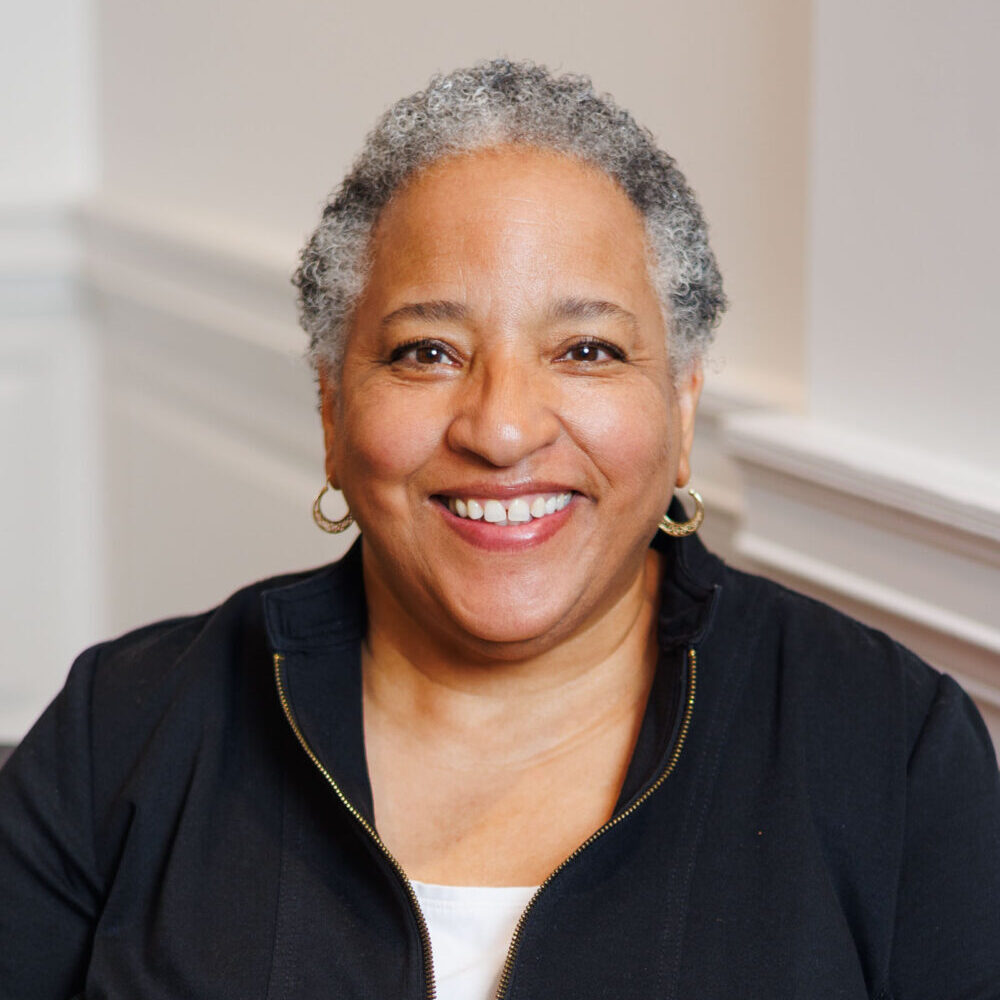
Marcia Easley
Marcia (McPeak) Easley is the Assistant Dean of Human Resources for Cornell Human Ecology. Prior to returning to Cornell, she worked in healthcare human resources for 30+ years in California, Pennsylvania, Washington DC, and North Carolina. Marcia has her BS and MPS degrees from the Nolan School of Hotel Administration at Cornell, and is a native Ithacan.
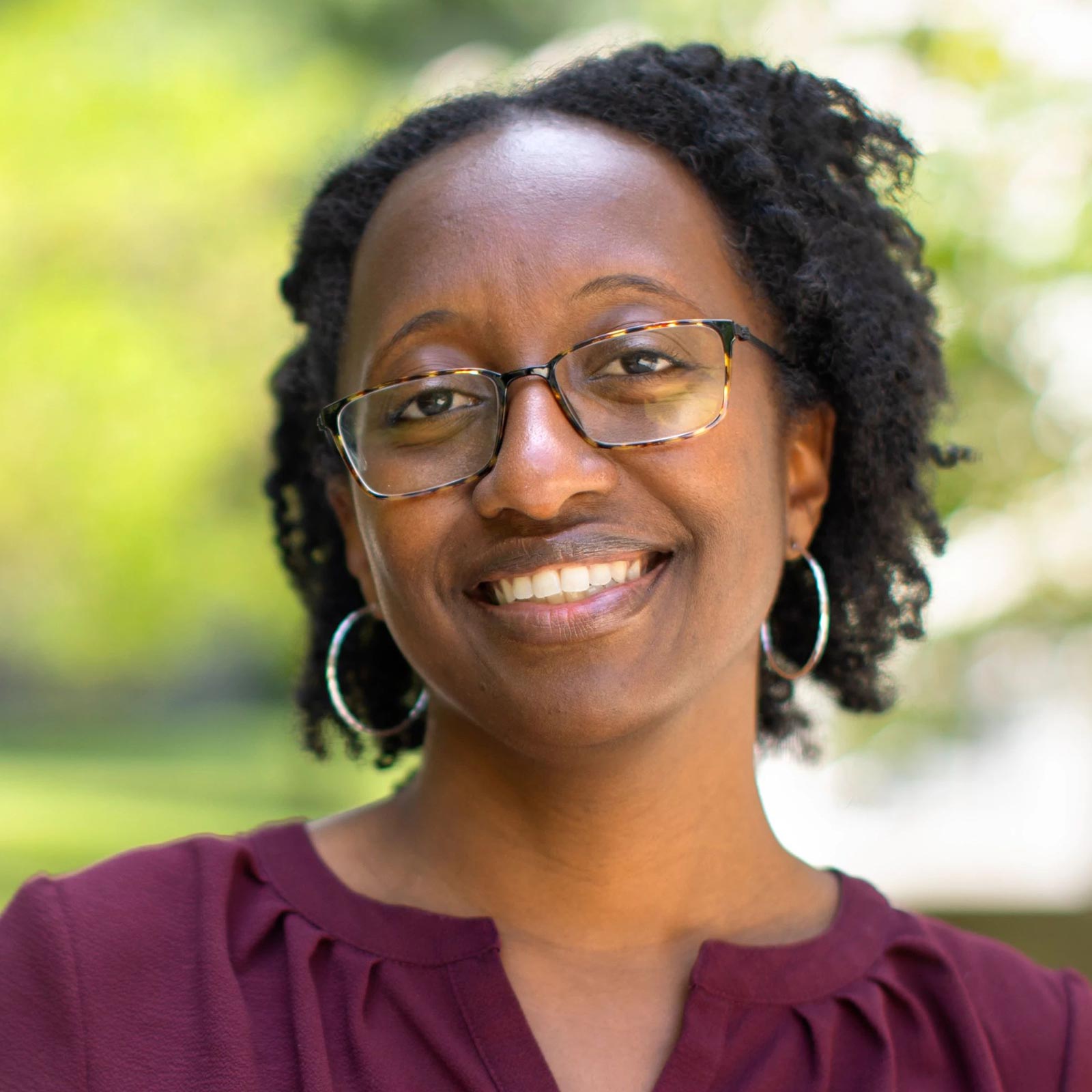
Jamila Michener
Jamila Michener, Professor of Government and Public Policy, is the inaugural director of the Center for Racial Justice and Equitable Futures.

Neil Lewis Jr.
Neil Lewis Jr, Associate Professor of Communication, Medicine, and Public Policy, is the inaugural associate director of the Center for Racial Justice and Equitable Futures.