by Carolyn Fan, PhD
When I think of a future I want, it’s full of art.
It’s a future where everyone has the safety and freedom to imagine, to express, to create. For my contribution to the Futures Forum I knew I wanted to create something visually that I normally wouldn’t be able to express through the written word.
I’m a mixed methods researcher, and I am much the same in my art practice. I love exploring different methodologies, learning about their histories, and discovering the unique powers various mediums have to offer. A survey or pottery, interviews or watercolor, multilevel modeling or textiles—they all have their own strengths, limitations, and ways to tell a story.
For this project, I was drawn to linocut, a type of block printing where images are carved into a piece of rubber. This creates a sort of rubber stamp that can be inked and used again and again to create prints. The fun (and tricky) part about relief carving is that everything is opposite. What is carved is white, while what is left can be whatever color you choose. All images and words have to be reversed, because the print will be a mirror image. Whatever you want to be revealed on the final page has to be painstakingly carved out with a chisel tool.
In day-to-day life, I’m as guilty as the next person of wanting instant gratification and efficiency. But art forms like linocut force you to slow down and immerse yourself in each meditative cut. It’s easy to make mistakes—and that’s okay. You don’t want the end piece to be perfect; it’s the stray strokes here and there that give a texture and charm to the final outcome.
Throughout this project, I was reminded of the importance of process in both art and research. The research that inspires me imbues justice and equity from beginning to end. How we do the work is crucial. This may require us to slow down, to provide meaningful thought to each analytical question, to consider all potential impacts, and to move at the speed of trust with our partners and community. But there is so much power in that intentionality. In this way, research can be transformative—just like transforming a chunk of rubber into something new.
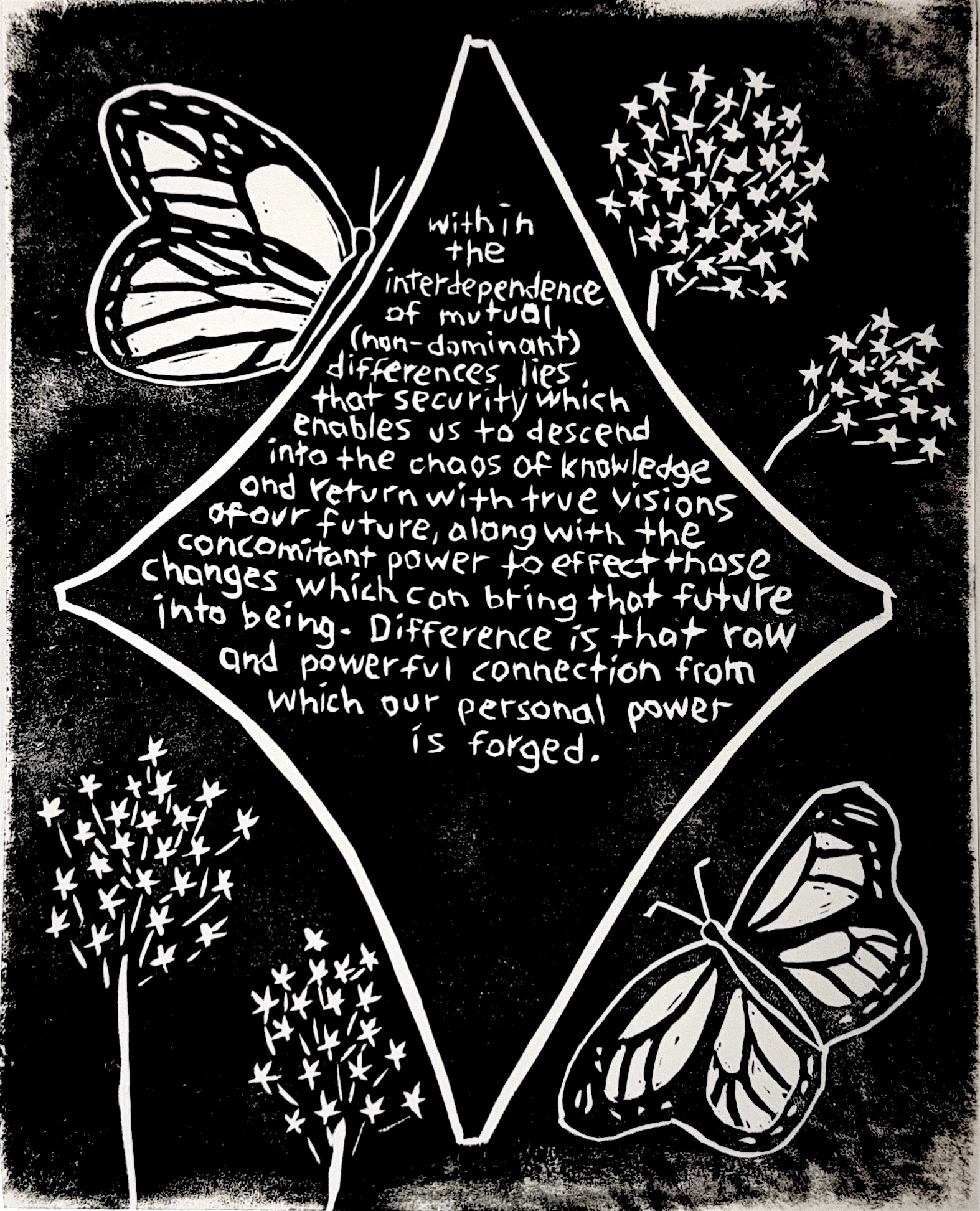
Monarchs and Milkweed (Audre Lorde)
Quote selected by Jillian Morley, Research Support Specialist
“Within the interdependence of mutual (non-dominant) differences lies that security which enables us to descend into the chaos of knowledge and return with true visions of our future, along with the concomitant power to effect those changes which can bring that future into being. Difference is that raw and powerful connection from which our personal power is forged.”
— Audre Lorde
Jillian: In my choice to work on issues of inequity and injustice through academia, I never want to lose sight of the fact that the academy has, at times, perpetuated the same harms I want to see undone. This essay (“The Master’s Tools Will Never Dismantle the Master’s House,” 1979) is important to me because it draws attention to that fact while weaving in moments, like the excerpt above, that provide a sense of hope.
Notes from Carolyn: In this quote, I was struck by the message that our differences allow us to rely on one other, and that this connection allows us to build better futures. I thought about the biological idea of mutualism—the symbiotic relationship between organisms that benefit both parties. Monarch butterflies and the milkweed plant are one example of a mutualistic relationship: milkweed is the only plant that monarchs lay their eggs on, and in return, monarchs pollinate milkweed flowers.
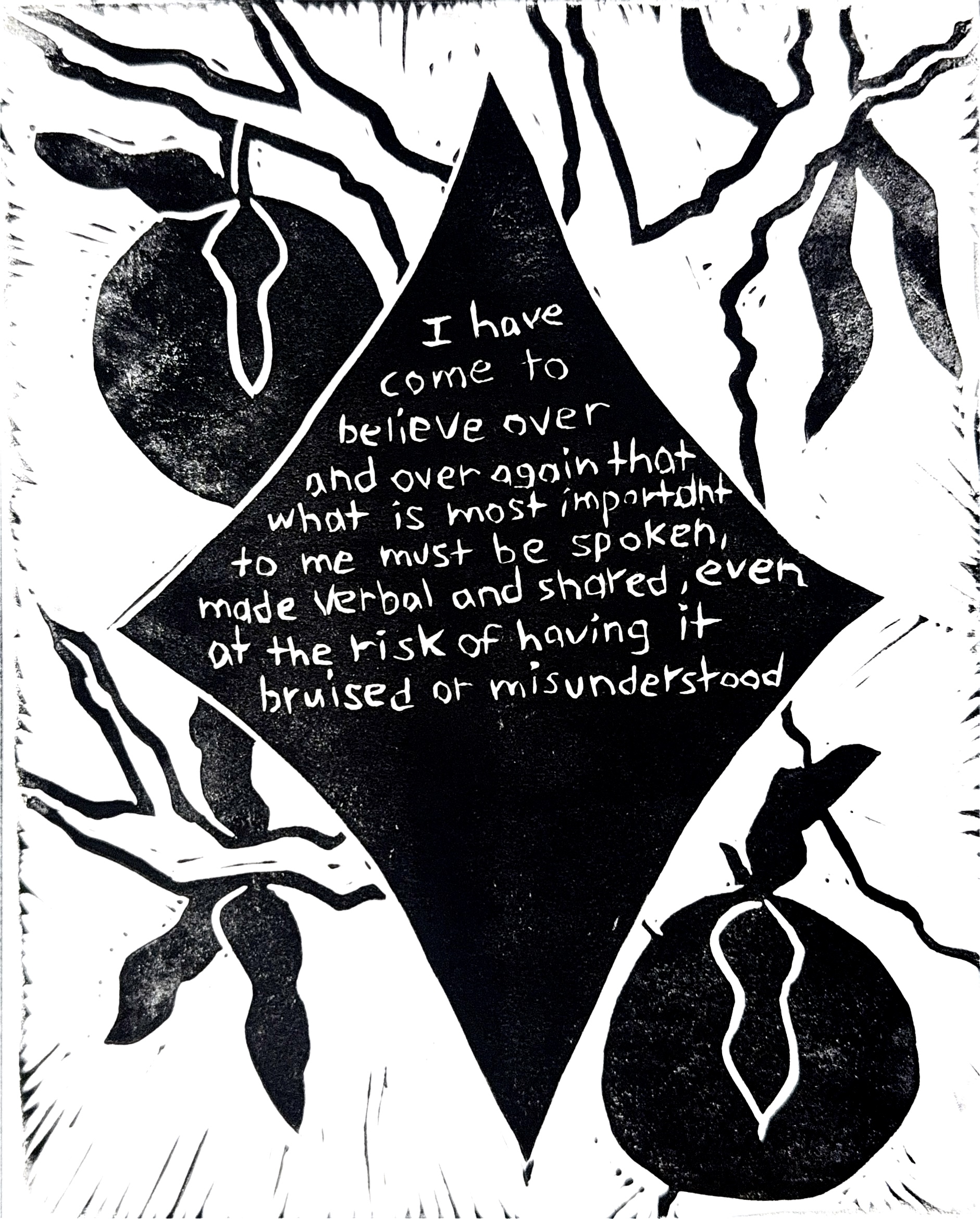
Bruised Fruit (Audre Lorde)
Quote selected by Tori Justin, Postdoctoral Fellow
“I have come to believe over and over again that what is most important to me must be spoken, made verbal and shared, even at the risk of having it bruised or misunderstood.”
— Audre Lorde
Tori: This quote from Audre Lorde reminds me that silence in the face of injustice is not an option, even when speaking up feels vulnerable or difficult. It speaks to the resilience required to continue voicing truth and advocating for justice, knowing our words may be challenged or misunderstood. Lorde’s wisdom encourages me to persist in speaking what matters most, trusting that this courageous vulnerability is essential to our collective work toward racial justice and equitable futures.
Notes from Carolyn: In this piece, I thought of words as fruit. Words, like fruit, are life sustaining when shared. At the same time, they are fragile and easily bruised. This quote and Tori’s words made me think of the other things fruit has been a metaphor for. For instance, the song “Strange Fruit” (written by Abel Meeropol and sung by Billie Holiday), protested the lynching of Black Americans in the South. Billie Holiday’s Estate says, “She [Holiday] said that singing it made her fearful of retaliation, but because its imagery reminded her of her father, she continued to sing the piece…”
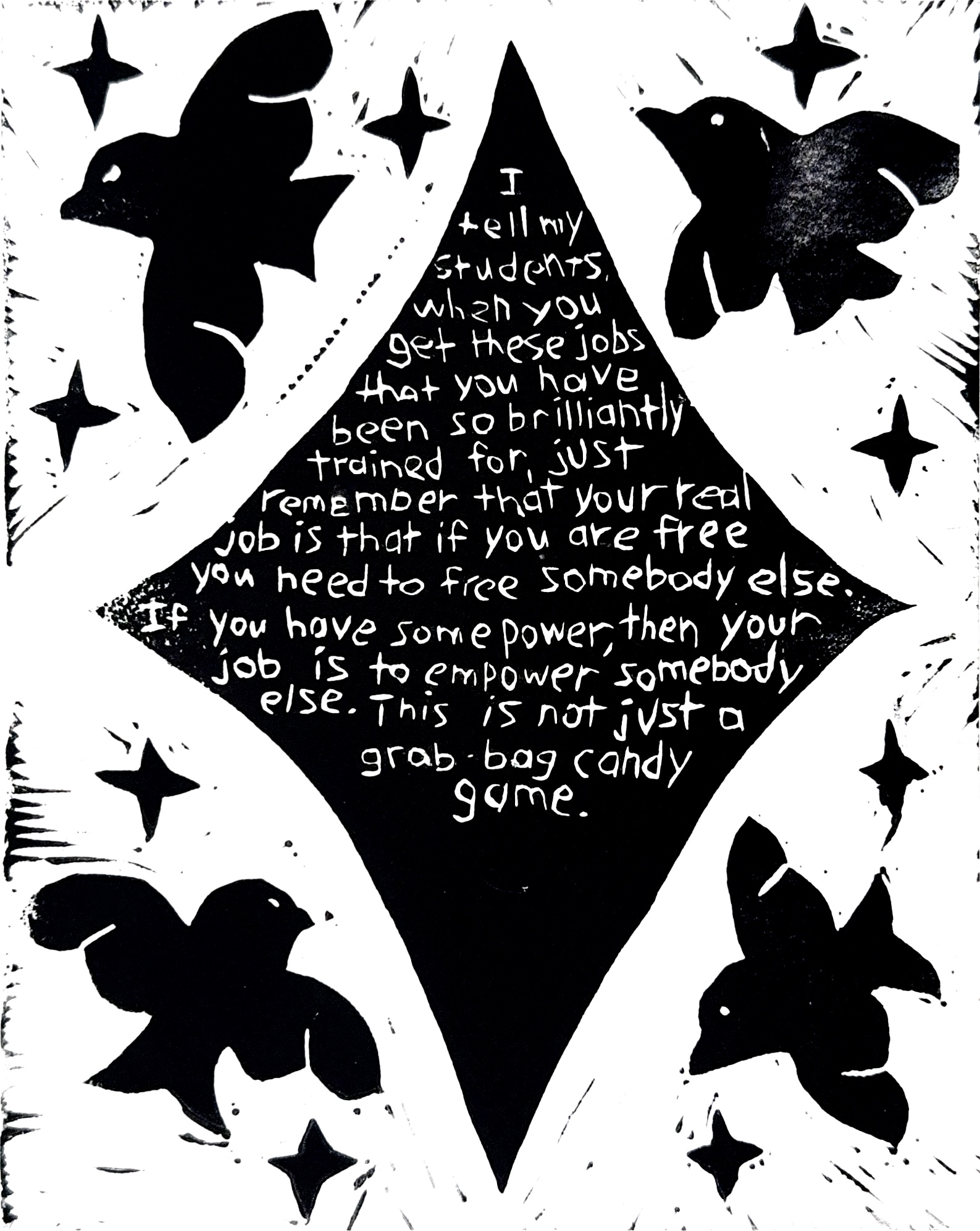
Free Birds (Toni Morrison)
Quote selected by Neil Lewis, Jr., Associate Director
“I tell my students, ‘When you get these jobs that you have been so brilliantly trained for, just remember that your real job is that if you are free, you need to free somebody else. If you have some power, then your job is to empower somebody else. This is not just a grab-bag candy game.’”
— Toni Morrison
Neil: I was “brilliantly trained” by my professors, advisors, and mentors to not only study the social conditions that perpetuate inequality and injustice in the world, but to also put my knowledge into action to address those injustices. Now that I sit on the other side of the desk—at one of the very institutions where I learned those lessons—I think one of the most important jobs I have is to teach future generations to carefully and rigorously study these issues and to do what I can to empower them as they embark on new ways to address them.
Notes from Carolyn: One thing I really enjoyed about this project was getting the chance to read more deeply about the scholars who were quoted. I came across this lovely article by Sandra Guzmán for Audubon Magazine about Toni Morrison’s relationship with birds. Birds often show up as motifs in Morrison’s books. Guzmán writes, “In her hands, birds embodied danger, terror, love, evil, longing, beauty, goodness, lunacy, defeat, life, death, and rebirth. But most of all, freedom.” Notably, Morrison is a Cornell alum, receiving her Master’s degree in English in 1955.
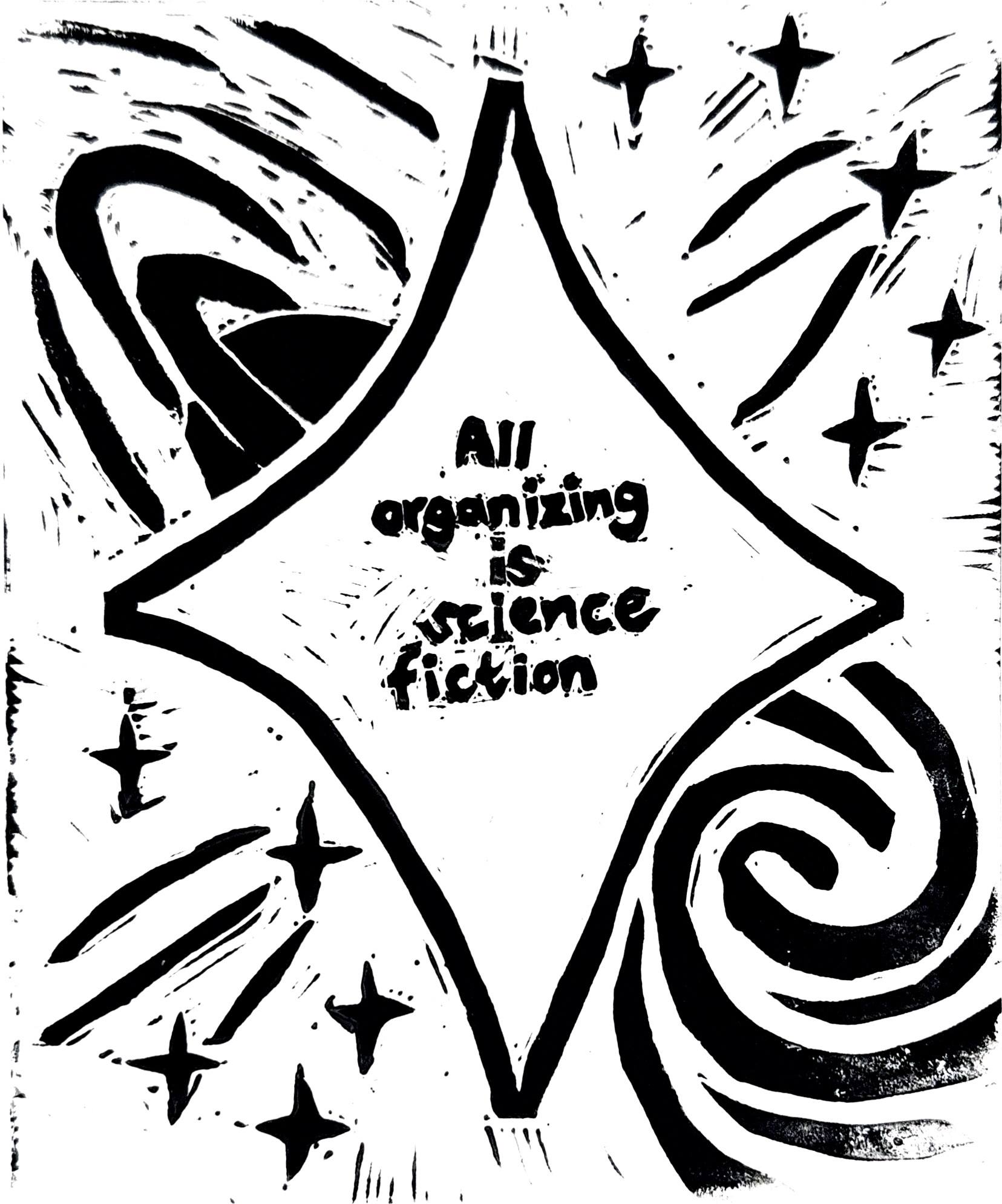
Science Fiction (adrienne maree brown)
Quote selected by Erinn Brainard, Center Admin
“All organizing is science fiction.”
— adrienne maree brown
Erinn: This quote makes me think about how meaningful change starts by imagining new possibilities. By trusting ourselves and each other, we can move towards a future we can’t yet clearly see. Our work at the Center focuses on building relationships, taking small steps, and making room for all those possibilities. As we turn our research and ideas about justice and equity into something tangible, we create real, lasting impact.
Notes from Carolyn: I really love this quote that Erinn selected. It reminds me of the idea that a truly equitable world is something that none of us has seen or experienced. Therefore, it requires innovative, radical, and brave thinking (e.g., what is found in science fiction and afro-futurism) to imagine the equitable future we strive towards.
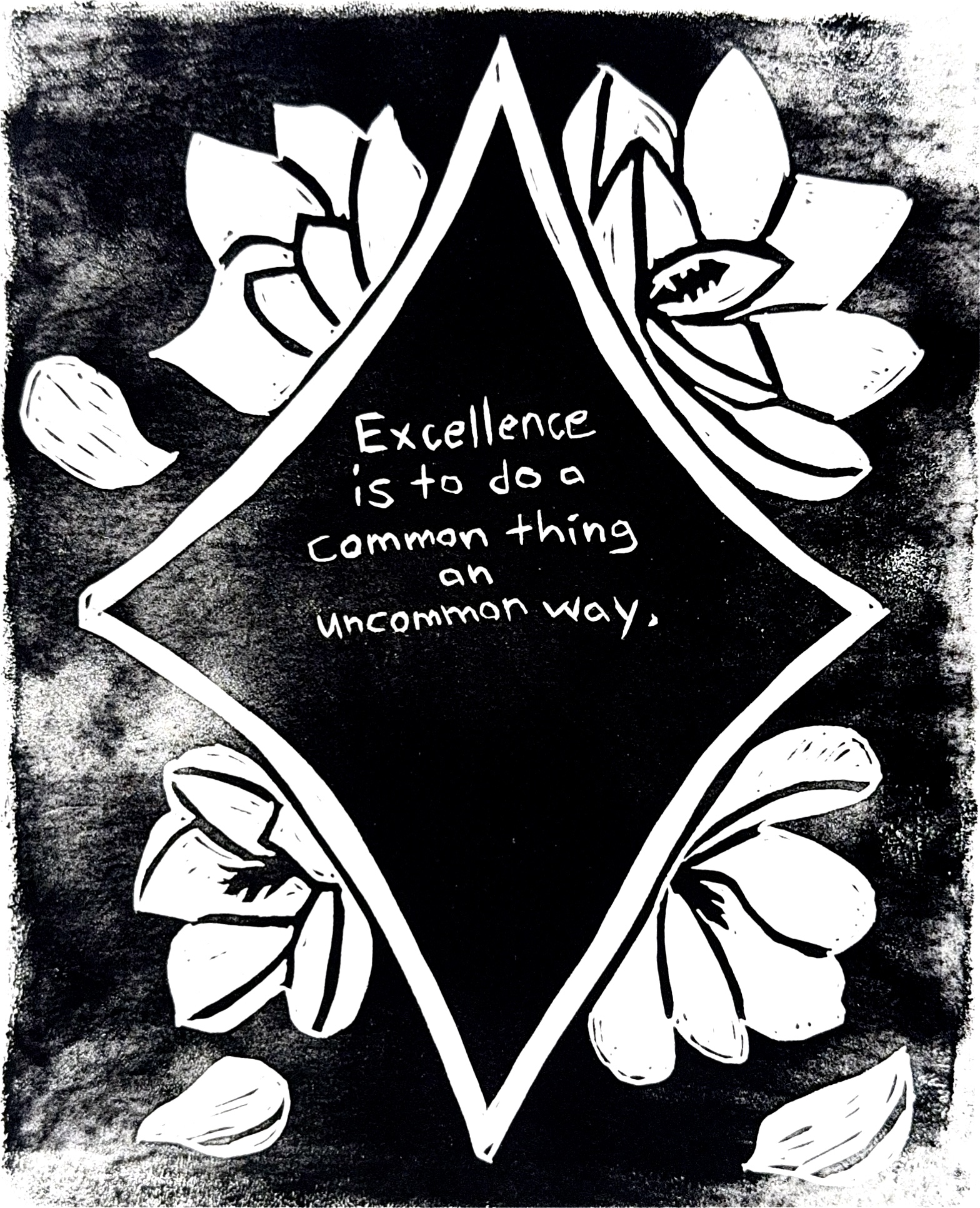
Magnolia Blooms (Booker T. Washington)
Quote selected by Leonard Mukosi, Postdoctoral Fellow
“Excellence is to do a common thing in an uncommon way.”
— Booker T. Washington
Leonard: This quote serves as a guiding force in my scholarship, which is rooted in critical inquiry and committed to addressing common social challenges in uncommon ways, underscoring the importance of elevating often overlooked and subaltern perspectives.
Notes from Carolyn: Magnolias are fascinating flowers, and I think they represent doing a common thing in an uncommon way. Instead of being pollinated by bees like many other flowers, magnolias are pollinated by beetles! This is because magnolias are as old as dinosaurs (95 million years old), and in fact evolved before bees did. Plus, magnolias are often the first sign of spring, blooming early because of their hardiness. I chose to depict the Southern Magnolia, which is native to the Southeastern United States (including Virginia, where Booker T. Washington was born).
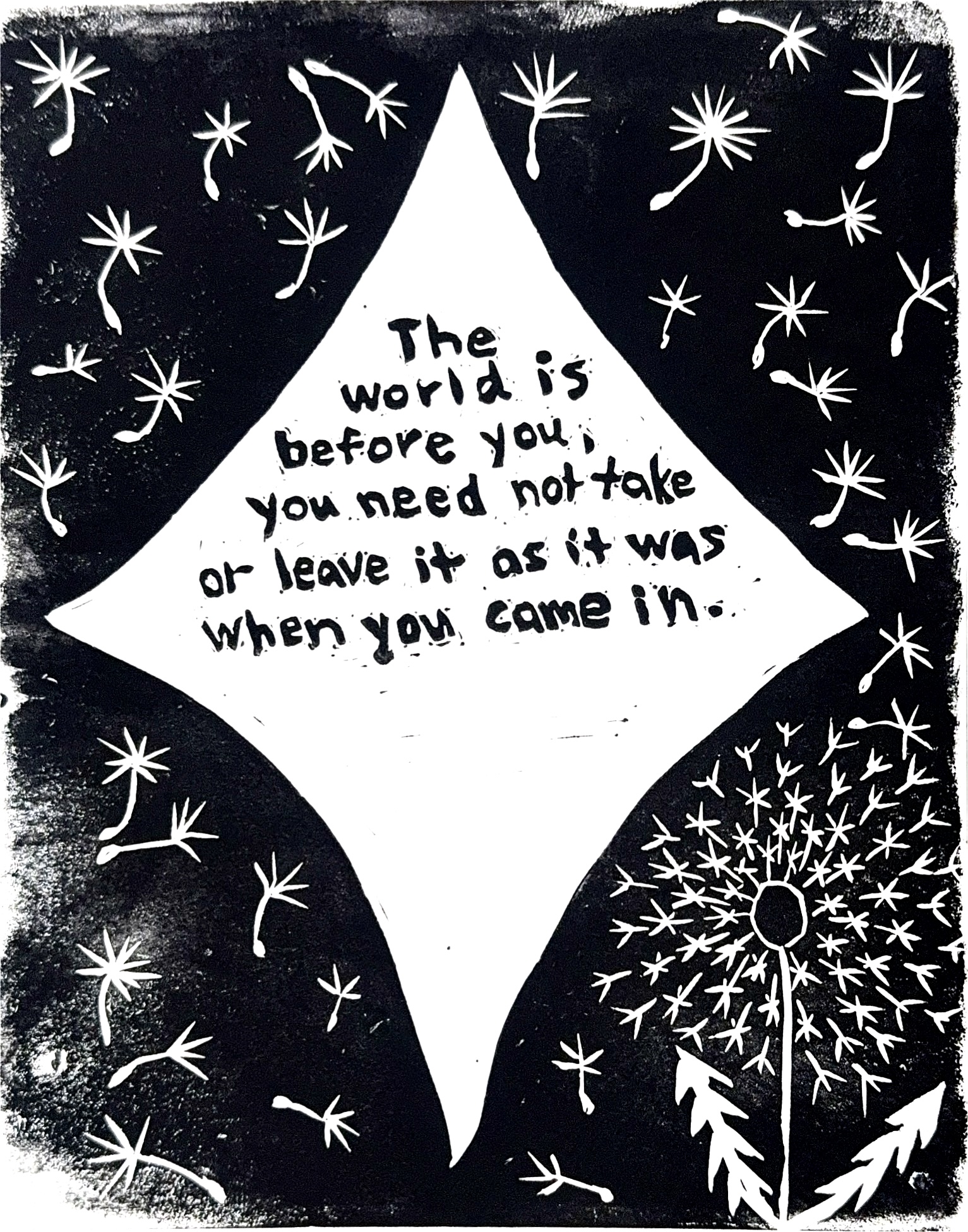
Dandelion Seeds (James Baldwin)
Quote selected by Jamila Michener, Director
“The world is before you, and you need not take it or leave it as it was when you came in.”
— James Baldwin
Jamila: When I first read this more than twenty years ago, I was in the throes of deep learning about the political and economic systems driving inequality and injustice throughout the world. I struggled with feeling powerless in the face of those systems. James Baldwin offered an antidote. His words reminded me that I had both the power and the responsibility to transform the world I found myself in, and to craft better futures. All these years later, the work I do at the Center for Racial Justice and Equitable Futures is inspired by an abiding belief in the ability of ordinary people to transform their world.
Notes from Carolyn: Wishing on a dandelion symbolizes hope, which is the emotion I got from Jamila’s words about her chosen quote. By taking a breath and blowing, you can help a dandelion spread its seeds, planting new dandelions near and far. Through this simple action, you are changing the world around you. In addition, dandelions have a long history of use for food and medicine. Edible wild plants like dandelions were foraged by Black Americans while they escaped slavery and sought freedom (source). Today, content creators like Alexis Nikole Nelson (@blackforager) teach others about the history of foraging and how it is an act of justice and connection to the world around us.
Monarchs and Milkweed (Audre Lorde)
Quote selected by Jillian Morley, Research Support Specialist
Bruised Fruit (Audre Lorde)
Quote selected by Tori Justin, Postdoctoral Fellow
Free Birds (Toni Morrison)
Quote selected by Neil Lewis, Jr, Associate Director
Science Fiction (adrienne maree brown)
Quote selected by Erinn Brainard, Center Admin
Magnolia Blooms (Booker T. Washington)
Quote selected by Leonard Mukosi, Postdoctoral Fellow
Dandelion Seeds (James Baldwin)
Quote selected by Jamila Michener, Director
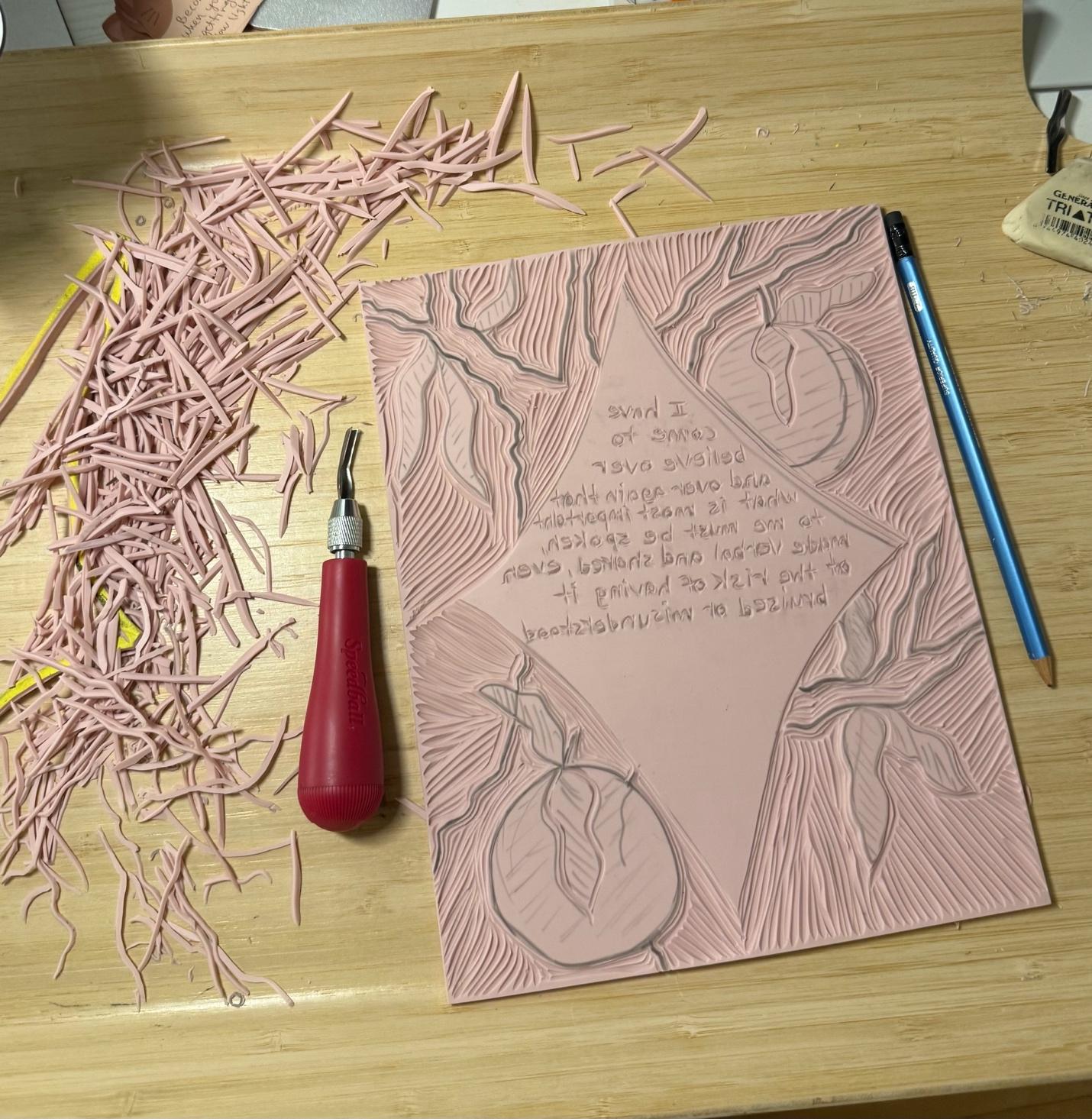
Linocut in Process

Carolyn Fan
Carolyn Fan is a postdoctoral fellow at the Center for Racial Justice and Equitable Futures.