by Dr. Leonard Mukosi
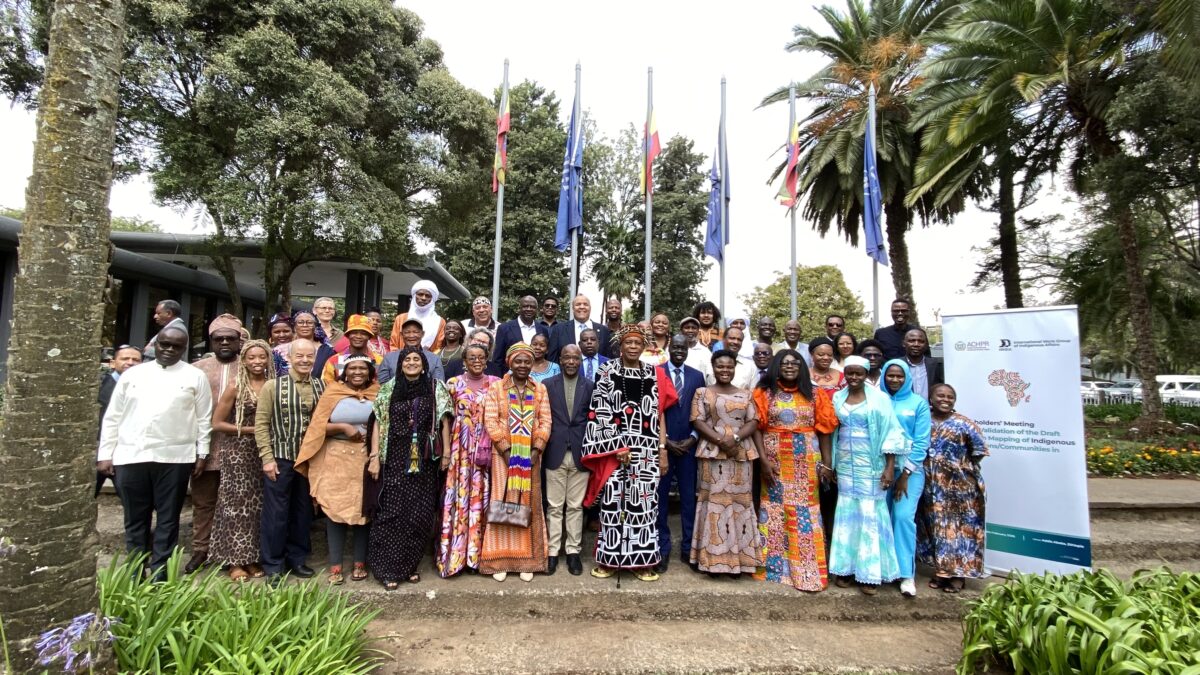
In February 2026, I travelled to Addis Ababa, Ethiopia, home to the headquarters of the African Union. The African Union is the continent’s principal intergovernmental body advancing integration, peace and security, economic development, and human rights across its 55 member states. I have served within the African Union since June 2023 as an Expert Member representing Southern Africa on the Working Group on Indigenous Populations (WGIP), a 12-member special mechanism mandated to promote and protect the rights of peoples identified as “Indigenous” across the continent. Attended by all Working Group members and 55 Indigenous representatives from 23 countries, the two-day workshop in Addis Ababa sought to revisit and advance the African Union’s conceptualization of Indigenous Peoples’ rights and affairs, including a critical re-examination of a central question: who is Indigenous in the African context?
Over two decades ago, the African Union, through the Working Group on Indigenous Populations, published its first comprehensive study laying a landmark human rights framework to protect the rights of those who identify as “Indigenous” on the continent. The study characterized Indigenous populations as “mainly different groups of hunter-gatherers and pastoralists.” While these communities remain present across Africa, the WGIP revisited this formulation during the February convening to assess whether it continues to adequately capture contemporary realities, or whether it has become unduly narrow.
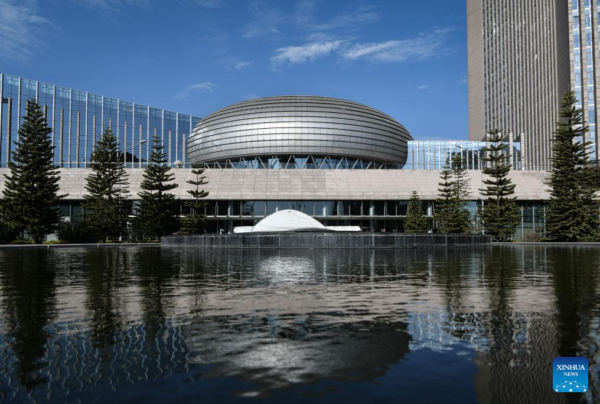
The African Union headquarters in Addis Ababa, Ethiopia.
The promotion of Indigenous identity, the protection of Indigenous rights, the right to self-determination, and the safeguarding of cultural practice within international and regional legal frameworks, including those of the African Union, have long been central to my work. Throughout my career, I have engaged these issues through legal scholarship, participation in international platforms such as the African Union, and Indigenous justice advocacy globally, largely from an abstract and institutional standpoint. Yet my recent experience at this convening in February marked a turning point, as the distance between my scholarly engagement and lived reality narrowed in ways that are no longer theoretical, but immediate and profoundly personal.
The question of who is Indigenous transcends a purely academic or professional inquiry for me; it is both existential and deeply experiential. I write as an Indigenous African man from Zimbabwe, in partnership with a woman of Native American and white heritage, raising mixed-heritage children whose identities are shaped at the intersection of Indigenous African and Native American indigeneity. As citizens of the United States by birth, my children are not recognized as Zimbabweans under the country’s citizenship laws nor as “Indigenous” under the Indigenization and Economic Empowerment Act. In Zimbabwe, while there is no formal recognition of Indigenous Peoples, indigeneity is tied to historically disadvantaged Zimbabwean citizens by birth, a criterion that, as a matter of law, excludes those born outside the country.
To be identified as Indigenous is not a matter of title or assimilation into a category of belonging. It is a lived continuity of culture, kinship, and inherited identity that shapes one’s sense of self across generations. Yet, despite not fitting within the African Union’s framing of hunter-gatherer and pastoralist, nor being recognized as Zimbabwean under domestic law, I had hoped my children’s indigeneity would at least be affirmed in one of the spaces to which they are most directly connected. This understanding informed a decision made a month after my WGIP workshop on indigeneity in Ethiopia: to travel to my partner’s Native American tribal nation to formally register our two-year-old son and six-month-old daughter as members of their tribe.
However, what was meant to be a sacred affirmation became an act of exclusion. Despite a clearly traceable lineage, our children’s identities were reduced to a calculation and deemed “insufficiently full-blood Indian.” Their indigeneity was discounted on account of African ancestry and their mother’s partial white heritage, notwithstanding their grandfather’s and mother’s enrollment, certificates of Indian blood, and all supporting documentation.
“To be identified as Indigenous is not a matter of title or assimilation into a category of belonging. Indigenous identity emerges from the lived continuity of culture, kinship, and inherited identity that shapes one’s sense of self across generations.”
This experience has brought into sharp focus a set of urgent questions that, while personal, illuminate a broader global reality: Can an arithmetic of blood define, or deny, their indigeneity? Without identifying as Zimbabwean, or as hunter-gatherers, are my children not Indigenous to the lands of their forebears? Was my son merely a visitor when his grandfather guided him through spaces of cultural memory on the reservation? Does the absence of formal recognition erase their Indigenous identity? And ultimately, who determines indigeneity: international law, academic discourse, the state, or Indigenous Peoples themselves?
At a surface level, limitations to membership to an Indigenous community may appear to serve legitimate purposes, such as protecting finite resources, including socio-economic rights like educational support, for which Indigenous Peoples are often wrongly perceived to be in constant competition. Yet in practice, biologically reductionist criteria such as blood quantum, together with static and antiquated representations of Indigenous life like hunter-gatherer, advance and reinforce a logic of elimination. Blood quantum is a colonially imposed regime through which “Indianness” has been rendered progressively diminishing. Similarly, across Africa, millions of people who identify as Indigenous but live in resettlement areas, urban settings, or the diaspora—my children and I included—are effectively rendered “unindigenous” because they do not conform to the narrow classifications of hunter-gatherer or pastoralist identities.
In a world where indigeneity is often treated as contested, conditional, or fading, tribal registration is not merely procedural, but an act of affirming belonging and securing access to culture and kinship. In the United States, without enrollment, children of Native heritage remain beyond the reach of legal protections designed to preserve Indigenous identity and sustain family integrity.
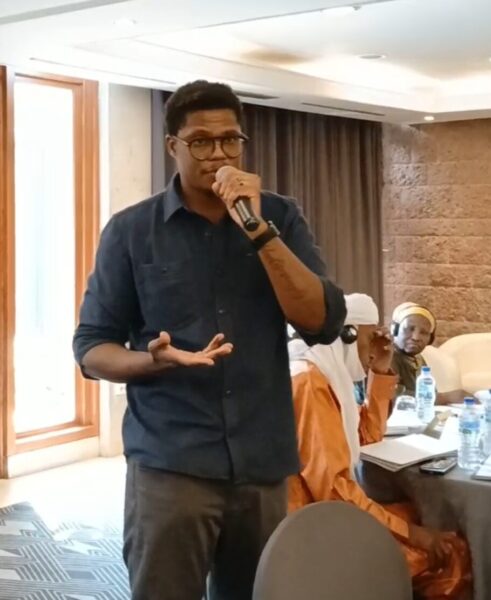
Dr. Leonard Mukosi speaks at the African Commission on Human and Peoples’ Rights (ACHPR) validation workshop at the African Union Head Quarters in Addis Ababa, Ethiopia, in February 2026.
Coming to a common understanding of what it means to be Indigenous can be difficult, in part because different places adopt different approaches. When my fellow delegates and I gathered in Ethiopia in February, we drew on our lived experiences, knowledge systems, and cultural practices, to critically revisit old classification systems and open space for a more inclusive and dynamic understanding of indigeneity. These conversations and reflections have led me to a different view of indigeneity than the views that guide the classification systems described above.
In my view, indigeneity transcends ethnic and geographic configurations and instead hinges on a shared global struggle against racialized systems of stratification constructed to legitimize hierarchies of human value along racial lines. It is therefore not coincidental that Black activism in the 1930s, followed by the Civil Rights and Red Power movements in the United States, unfolded alongside anti-colonial resistance movements across Africa, Latin America, the Caribbean, and other parts of the world. These interconnected expressions of resistance transcend spatial, temporal, and ethnic boundaries, as reflected in the work of Steve Biko in Africa, Frantz Fanon in the Caribbean, and W. E. B. Du Bois in the United States. Though separated by time and geography, their intellectual and political interventions converge in a shared denunciation of systems that produce violence, erasure, and the dispossession of people of color and Indigenous Peoples worldwide.
Today, global movements through which people of color confront the afterlives of colonialism and slavery manifest in the forms of Black Lives Matter (BLM) and Missing and Murdered Indigenous Peoples (MMIP), which have taken root in the United States, with the latter extending into Canada and New Zealand. These struggles resonate with movements such as #EndSARS in Nigeria, #RhodesMustFall in South Africa, and #VidasNegrasImportam in Brazil. Collectively, the voices echoing across these platforms are those of populations dispersed beyond their ancestral territories, who mobilize urban spaces to foreground their claims, alongside those who remain rooted in ancestral lands.
These are lessons I hope my children learn, and the reasons why I remain committed to nurturing their connection to my Indigenous Zimbabwean heritage through lived practice, language, and memory. It is also why, despite the denial of formal tribal registration, my partner remains committed to nurturing our children’s connections to their Native American heritage. It is important to teach them about their history, regardless of whether international law or contemporary nation states formally recognize it.
Global Indigeneity: Moving Beyond Localized Imaginations
Without seeking to fix a definitive meaning, I conclude by advancing a broad formulation of indigeneity that centers its function as a shared compass: a mode through which claims to social change are articulated. I refer to this as Global Indigeneity. Grounded in the principle of self-determination, this framework recognizes the capacity of historically marginalized populations to assert indigenous identity beyond the constraints of state recognition, tribal enrollment, and international legal formulations. It encompasses the following categories:
- Territorial Indigeneity: Indigenous communities who have maintained or restored enduring ties to ancestral lands. This includes communal farming peoples, tribal communities, hunter-gatherers, pastoralists, nomadic communities, and many Indigenous communities that have revived or maintained ties with ancestral lands.
- Urban Indigeneity: Indigenous populations, and their descendants, who predominantly reside in urban areas within state boundaries. These communities may or may not maintain sustained connections to ancestral lands. Their identities are maintained or reshaped through social, cultural, and political life in urban contexts.
- Indigenous Diaspora: Indigenous Peoples and their descendants who have been dispersed, whether voluntarily (e.g., migration, economic movement) or forcibly (e.g., colonization, enslavement, conflict, environmental displacement) across state borders. Typically, Indigenous diaspora shares collective identity through memory, cultural continuity and reclamation political claims, or renewed connections to ancestral or rearticulated homelands.
It is within this third category that my descendants would fall, a position that raises a particularly thorny issue, as it appears to unsettle the commonly recognized emphasis on a special relationship to land as a defining feature of indigeneity. This category would also encompass African Americans who, despite the historical rupture of connection to ancestral lands, have in recent years increasingly traced and reclaimed their African ancestry through technological advances and cultural initiatives.
Indigeneity is forged through resistance to histories of dispossession and marginalization and remains inseparable from the ongoing acts of agency that continue to drive contemporary anti-slavery and decolonial movements. It is therefore morally and ideologically indefensible to invoke indigeneity in relation to any group whose historical formation rests on voluntary yet violent invasion of Indigenous territories, through colonial occupation and enslavement, thereby creating the very structures of domination they now seek to appropriate.
A more expansive, global conceptualization of indigeneity, grounded in the principle of self-determination, is necessary to accommodate those who fall outside formally prescribed parameters of Indigenous identity and whose existential questions remain unresolved. Global Indigeneity reclaims the authority to define indigeneity and locates it within Indigenous Peoples themselves, grounded in collective memory, cultural continuity, and shared histories of marginalization. At its core, it reflects a global confrontation with racial hierarchies historically organized around the hegemony of whiteness, a struggle that has long connected peoples of color across continents. These identities persist, evolving across legal systems, borders, and cultural worlds, while sustaining a continuous claim to dignity and rights.
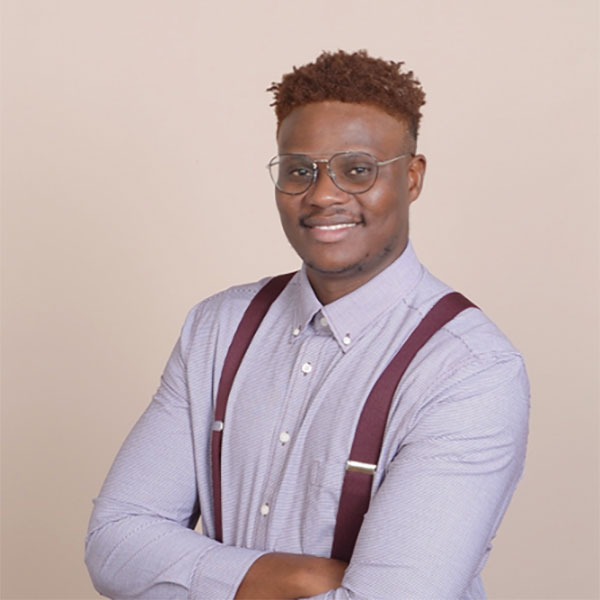
Leonard Mukosi
Dr. Leonard Mukosi (SJD) is a Postdoctoral Fellow at the Center for Racial Justice and Equitable Futures. His interdisciplinary scholarship spans international human rights, Indigenous justice, law, and criminal justice. Dr. Mukosi serves as an Expert Member of the African Union’s Working Group on Indigenous Populations, Communities, and Minorities, contributing to the development of regional standards on rights-based governance.