by Liz Neeley, Jamila Michener & Neil Lewis, Jr.
Our guest this week is Liz Neeley, founder of Liminal, a science communication collective that focuses on sensemaking. We discuss the ways storytelling can help us make meaningful change from our research, navigating risks of speaking out, and tools for working against the strategic onslaught of information overload. Liz also guides us through planning a security party, so you can take practical steps, in community, to ensure you and your data are protected.
Links to further reading from our discussion
- You can see more of Liz Neeley’s work by visiting Liminal, subscribing to Meeting the Moment, and checking out Storymakers and Unbreaking
- When Liz mentions several tools for security and resourcing, she’s thinking of resources for whistleblowers, the Researcher Support Consortium, and Expert Voices Together
- Try working through these checklists at security parties
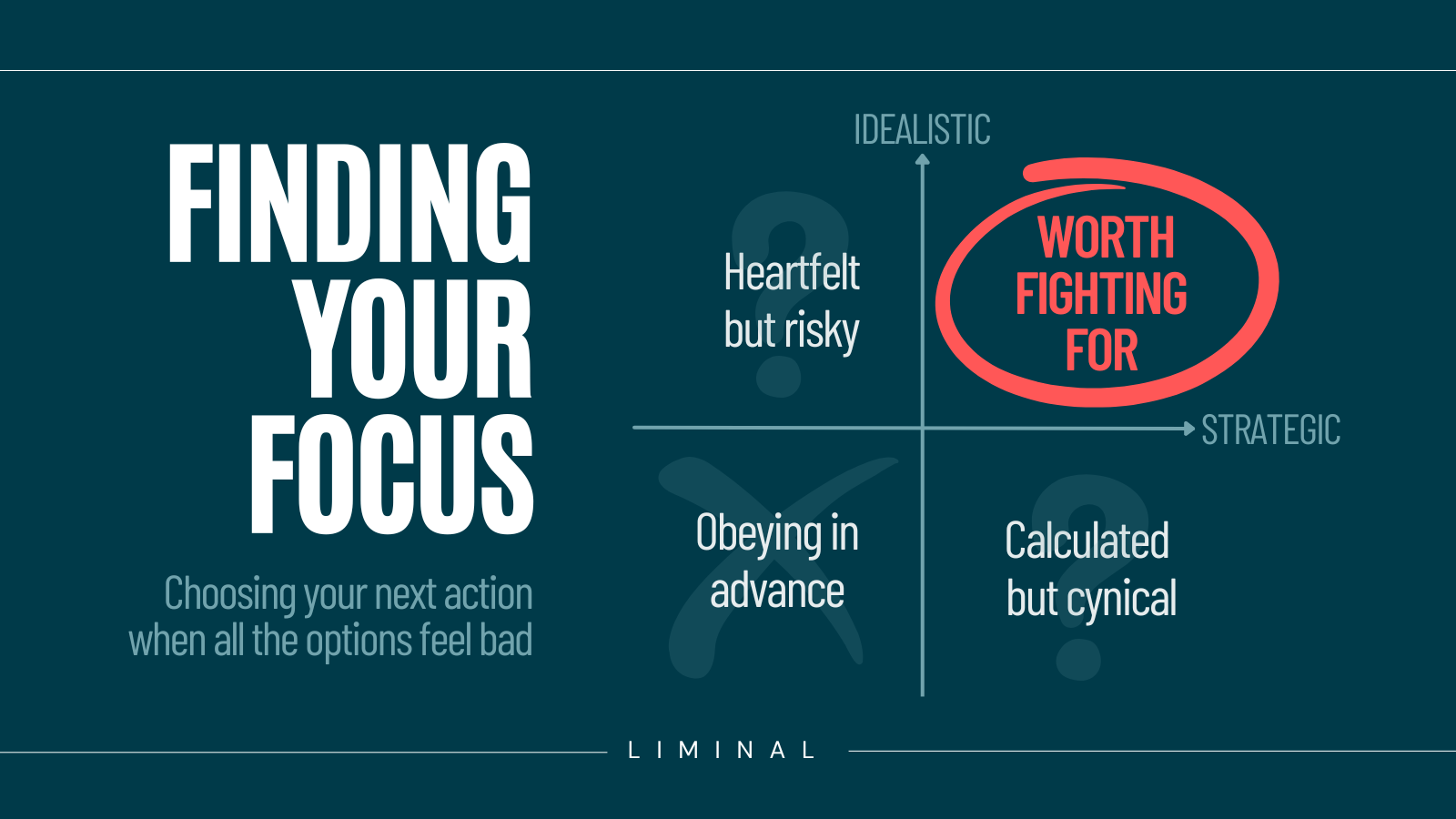
- The Liminal quadrant visual can help you make choices about when to speak up and take risks
- Additional resources not specifically mentioned in the podcast but which Liz refers to include Knight First Amendment Institute, American Association of University Professors (AAUP), lawyers in the public interest, FIRE Legal Network and Legal Defense Fund, Electronic Frontier Foundation, and PEN America
Audio transcript
Intro: This is the Futures Forum podcast, a production of the Center for Racial Justice and Equitable Futures at Cornell University. Find us online at equitablefutures.cornell.edu.
JAMILA MICHENER: Hello listeners. I’m Jamila Michener, director of the Center for Racial Justice and Equitable Futures, and professor of Government and Public Policy at Cornell University.
NEIL LEWIS, JR: And I’m Neil Lewis, Jr., associate director at the Center, and associate professor of Communication and Public Policy at Cornell.
JAMILA: Welcome back to the Futures Forum podcast! Futures Forum is a multimodal space for collectively dreaming, imagining, and co-creating ideas. Since we started Futures Forum in January, we’ve had really wonderful conversations with people like Keisha Blain, Marcia Easley, and Victor Ray. Though each of our guests have been quite distinct, they all have made significant contributions to scholarly knowledge, public discourse, or higher education, and those are all things we really value here at the Futures Forum. Today our guest, Liz Neeley, has charted a unique path in all of these arenas. We’re really excited to talk to Liz today about her important work supporting, organizing, and equipping scholars to communicate their work, tell powerful stories, and navigate the really tricky waters of higher education in a—frighteningly, sometimes—changing world. So, welcome to the show, Liz.
LIZ NEELEY: Oh, thank you! I’m delighted to be here.
JAMILA: We’re really thrilled to have you, and I want to start with a little background for our listeners, as we usually do. For me, I first came across Liz on social media—I think it might have been BlueSky because it was on the more recent side. Liz has this incredible newsletter, a weekly newsletter called Meeting the Moment, and I don’t know quite how it came across my feed, but I’m happy that it did. It’s a concise and really very informative, wildly informative, analysis of all the important things that are happening in science and in higher education and what those things mean for people who care about those things. When I came across Meeting the Moment—I think it was some time in 2025, but you know, a day is like a thousand years these days, so I really don’t know!
LIZ: What is time?
JAMILA: Exactly, what is time? But it was a time when it felt impossible to keep up with all the things that were happening every day, particularly the things in higher education and even in realms that were directly relevant to my work and my life. I just couldn’t keep up. And I was grateful for a place where I could find clear information, sharp analysis, and just kind of cut through the noise and the haze, and before long, I realized that Meeting the Moment was just the tip of the iceberg as far as Liz’s work is concerned, because Neil—the one and only and most wonderful Neil Lewis, Jr.—he introduced me to Liz more fully, and I’ve only been more and more impressed as I’ve gotten more chances to learn with and from Liz.
So Neil, can you give us some detail here and jump in? I don’t think I can do Liz justice, and I want you to, as always, finish what I’ve started and do it better than I am doing it.
NEIL: I’m happy to jump in here. Liz is one of my favorite people. I’ve known Liz for about ten years now, I think, which is kind of wild—
LIZ: Again, what is time?
NEIL: What is time? Yeah, when I was a graduate student at the University of Michigan, Liz came and did a talk and a workshop on science communication, which is something I’ve been thinking about since then, in graduate school. And so that’s where we first met, and I’ve been following Liz’s work—and we’ve been following each other’s work—in that space since then. So seeing just all the work Liz has been doing in science communication in so many different ways has always been impressive and inspiring. You know, if we fast forward to 2022 when I was still an assistant professor, back then Liz created this incredible science communication fellowship called Storymakers (we’ll put a link to that in the show notes so people can see what that’s all about). But Storymakers is this immersive approach to training scientists to share their work in multiple formats, so there’s an intensive period on how do you write well on sharing your work? How do you create podcasts as a way of doing science communication? How might you film documentaries? So spending a week on Catalina Island learning all these things was just a really transformative experience for me. And it’s actually directly relevant to the Futures Forum itself because I got to be part of that initial cohort that Liz trained, and the tools that she equipped us with were tools that were sort of foundational as we were building Futures Forum! I remember we were sitting in our conference room talking about this idea for Futures Forum, and we were talking about this multimodal format idea, and I was like, “Oh, I actually know something about that!” because this is what Liz actually trained us to do. You can see some of the fruits of that labor.
But from Storymakers, Liz went on to build this broader science communication collective called Liminal, which works in a variety of ways to cut through the noise, as Jamila was just saying, in order to make science make sense for everyone. And so, I’ve been fortunate again to get to work with Liz and the other amazing members of the Liminal collective. And yeah, that’s some of the amazing things that Liz has done over the years.
JAMILA: Okay, so I think, listeners, that you have gotten a sense of maybe why we thought it would be valuable to talk to Liz today. I personally feel like I should say thank you to Liz because Neil always has—I’m always like, “How does he have so many good ideas?”—and now I know it takes a village. It’s because we have good people in community with us who are helping us to develop. So—
NEIL: Amen.
JAMILA: Thank you, Liz, for the gift of Neil. Okay! I want to start with what has become somewhat of a tradition, I would say, on the podcast of beginning by asking our guest to give us sort of their origin story. All of the things that we’ve said about you thus far, Liz, like, that is not a straight, linear path. No one’s like, “You know, when I grow up, I want to be a science storyteller.” You know, you have to get there, somehow. And given how unique your work and your approach is, I’m really curious about what brought you into doing that work, and what motivates you? What makes you tick?
LIZ: Yeah. When I think about my answer to this question, I realize I’ve got to take it in two parts, and so the first is like, why communications? Because I’m a scientist by training, I was a marine biologist. I thought I was going to be a field ecologist, you know, my whole life. And careers have a way of surprising you sometimes. So why communications. But then also, like, why justice, right? Why is this my life’s work? And I think, I realize there’s a repetition you’re going to hear in my themes. Both of these stories are about recognizing that the world does not work the way that I thought it did, but then instead of despairing, using that as fuel for the fire.
So why communications is because I was a very naive graduate student who had very clear ideas about science as this beautiful thing that was full of rigor and logic and took us away from daily concerns. And I learned very much the hard way that data do not speak for themselves. And so it was really like getting my heart broken in my early twenties because I thought that scientists did research and everyone else was like, “Oh wow, we never knew that! Thanks, folks, now we’re going to do everything differently!” And I was part of a big international meeting on international trade and endangered species when I learned that that is absolutely not—not how it works. And so a thing you need to know about me is I hate losing. I hate it. And so I have spent the rest of my career thinking, like, right, how do people search for and find and process and use information? How do decisions actually get made in the real world? What do people remember? What’s persuasive, right? So that’s why comms.
And so then, for me, I realized this is really about power. It’s so infuriating and unfair when you have all this knowledge but none of the power to make it matter. So that was why I shifted my career pathway to comms. And then, you know, early on, I was like, “Oh, science communication, like, this is the way.” And I recognized this familiar pattern around justice and around, like, mistakenly believing that the world works in these fair ways in the ways we’ve described it. Go back to, like, growing up as a kid, there’s something really special about believing that you are the good guys, right? That there’s right and there’s wrong, there’s good and there’s bad. I grew up in a military family. My dad was Air Force. And he was someone who had that rock solid moral core, not a man who saw a lot of, like, gray areas. And both of my parents really believed—and lived out this belief every day—that you have to work hard, and you take the high road, and you make the tough choices, and you make sacrifices. And for us, as a military family, being assigned to, you know, move every few years, the sacrifices were real. And I was about ten years old when we moved to Germany. And in those years, the wall was still standing in Berlin when we arrived. And I was just a little kid, right, with a little kid’s understanding of the world, but that contrast between freedom and oppression was so real and vivid to me. And World War II didn’t feel like distant history, right? I lived in a little village where we could see where the villagers had taken refuge during fire bombing. My girl scout troop went to the cemetery at Alsace-Lorraine and placed flags. I read way too much Elie Wiesel, maybe too young. So the Holocaust was something that was just, like, so real and present there. And I thought, because I was also taught in school in history, that all of American history was about being the good guys and fighting for what was right. Ending slavery. Ending segregation. Punching Nazis, right? That’s how I thought the world was. And as I grew, as I’m grown now, I realize the story is a lot more complicated, and I no longer accept those narratives as a description of reality, right? Science is not a meritocracy. But I also refuse to allow my surprise and shame, maybe, over initially believing sort of that pat, naive worldview, I won’t let it harden into cynicism. I don’t think it’s unreasonable or stupid or foolish to believe that we can do better and we must do better. And I think it is true there is evil in the world. There are people doing horrific things all the time, and so, standing up and speaking out and maybe even fighting really hard feels like a responsibility to me. And I understand that the cost may be terrible.
NEIL: Yeah.
LIZ: But I also take comfort in knowing that there’s a long line of people who started with much less than I have and achieved so much. And so that’s why I choose comms, that’s why I choose justice, no matter how bleak things feel.
NEIL: Yeah.
JAMILA: Love it.
NEIL: Yeah, thanks for sharing that, and there are a couple of things that are really interesting in sort of how you got to this path, right? So, you know, you started talking about your background in science, and the narratives that scientists tell about producing the evidence and then good will come from it, you know, as this simple linear path. The narrative of what Jennifer Richeson calls the narrative of racial progress in the United States: the US is always the good guys; we always do the right things. There’s just, like, these simple narratives that have been told over time that, you know, your own experience has been running up against the reality of it all, is really interesting, but also diving deep and studying what else is going on in the context. It just reminds me of the conversation we had last month with Victor Ray, and talking about, in his case, reading and sort of growing up learning so much about civil rights history being different than the history that’s taught elsewhere. It’s just—there are a lot of parallels here that I just keep thinking about.
JAMILA: Absolutely. I’m really glad that we decided somewhere along the way to ask people about their origins and their story and their motivation, because I feel like there are some resonances even across people with very different experiences and backgrounds. I mean, what you said about where you—growing up and that time in Germany, I mean, that’s, it’s incredible the things that open our eyes up, right? And then there are many people for whom they don’t have those formative experiences, and so these opportunities that we have as scholars, as scientists, as thinkers, to take the knowledge that we’re generating and bring it out into the world… I mean the hope is that we create those experiences, certainly for our students that we teach, but also beyond that in the world more broadly, right? For the kids that won’t get to go to Germany and reflect on the things that you got to reflect on in the ways that you got to reflect on them. Where will their moments of recognition come from? And I think part of our role as scholars is to think about how we can create those moments of recognition in community, through public discourse, and so forth. And that’s why the work you do around communication is so compelling to me, and I think so important for people who are justice minded.
LIZ: Yeah, thank you.
NEIL: Maybe a quick follow-up here. For our listeners, I’ve been in a Liz Neeley training session or two, and she creates those moments in those sessions. Can you talk a little bit about how you get scientists to think about these kinds of things as they’re thinking about communicating their work. You work with not just social scientists who might be thinking about the social world, but you spend a lot of time working with immunologists and biologists, and you’re trying to get everyone to think about these complexities. Can you talk a little bit about how you do that?
LIZ: Ooh, that’s a great question. I think one of the things I learned from spending a few years in a storytelling organization is recognizing that, as important as it is for us to be thinking about stuff, one of our challenges is the curse of too much knowledge and people who are in academia being so in their heads and so focused on the intellectual side of things that they neglect the emotional or the, yeah, the affective and maybe even the physiological side of what it means to be a human. To go through our lives, to learn things, and to feel. Like, my answer to you about growing up as a kid and having this, like, formative experience in Germany—I normally wouldn’t talk about it. One of the only reasons I felt, oh, maybe I should start there, is because I listened to the episode with Victor, and he talked about his childhood. So he created a permission structure. So sometimes what I’m trying really hard to do in workshops is to create permissions for people to, to weave together all of the aspects, you know, the heart and the mind, the full force of our intellects, as well as all of these values that shape who we are, that drive our scholarship, and our desire to create impact in the world. Some of those things we feel as much as we think and talk about, and so that’s one thing that I’m trying to do.
And then the other thing that I think is really important in workshops is there’s a lot of performance that we all do as professionals, right? We put on our jackets of speaking in our expert capacity. And I don’t know if this is true of everyone, but for a lot of my dear friends, I’ve watched them build up layers of armor—that they have to, as scholars who are just constantly coping with criticism and dealing with the ways that we can shred each other’s work. And so being able to step away from those ingrained habits and to, to use our curiosity and our ability to say, like, “Wait a minute, what we are saying right now does not actually match what we are seeing.” It’s that allergy that I have to the gap between our expressed value of what we say we care about and then, like, the day to day actions that don’t map onto that. This is why I love communications so much, is that it’s hard to talk about stuff if we don’t have language, if we don’t have the ability to name something, to point it out, to talk about it together. And so I think that’s kind of underlining what I’m doing in these workshops.
JAMILA: Wow, I love that. I love the idea of a permission structure, first of all. I’m going to take that, and I’ll cite you, but I like it a lot. And I appreciate what you said about the armor. In part because it resonates so much, and in part because in some ways, like, I can be—you know, I don’t think I’m an exception, there’s armor there, trust me—but in some ways I can be really different. Like, Neil knows this, I’m going to tell you all the things, all my embarrassing stories, wear my heart on my sleeve, I can sometimes, my mouth outruns the wisdom and/or armor, but sometimes for me that is a push-back against an element of this world, of scholarship or academia, that I’ve always felt uncomfortable with, which is an element that requires kind of masking, and I don’t like masking. We all have to do it sometimes, but I don’t want to. So I love the idea of you thinking about and bringing people into a space where they can really think about how they can do something other than that. And it’s a nice transition into a question that I have around this.
You provide scholars with the kinds of tools that you’re telling us about, right, and these are tools that help them to be kind of thoughtful and critical and interrogating what they’re doing and how they’re doing their work. And to incorporate storymaking and storytelling into their work. And I want to really think about that in relation to our mission at the Center for Racial Justice and Equitable Futures. And I want to acknowledge—probably as I end up doing at some point in every podcast, and I’m sorry, everyone, if you’re getting tired of this, but this is the world. I want to acknowledge that this is, it’s a difficult moment for scholars who study racism. And we’re facing hostility and retrenchment, and it’s volatile. You don’t know what’s going to happen tomorrow, never mind a year from now. And so it’s hard to be in the business of telling knowledge-based stories of the sort that we want to tell about racial inequality. And that’s true both because it feels like the audience on the other side is less receptive to those stories, and it’s also true because it feels less safe to tell them. So when you talk about that armor, like, gosh, scholars who are thinking about and studying and doing work related to racial justice want to put on all the armor right now, and I can’t blame them, right?
LIZ: Yeah, for good reason, yeah.
JAMILA: Right? But my mom always used to say, “Don’t hide your light under a bushel, Jamila!” And I think about that a lot, you know, and I’ve thought about it a lot, through grad school even, when I felt like shrinking into myself. Her voice, you know, and she was still alive then, her voice would be in my head and in my life, over the phone or what have you. So what is your advice or the insight for scholars who need to be telling these stories, have the knowledge and the ability to tell these stories, but are in a moment where it might feel safer, and even better, to kind of hide their light under a bushel?
LIZ: Yeah. The first thing I want to say is, before I even try to give any advice, I just want to say thank you for everybody who’s doing this. We need you. And we need you safe and thriving. So, rather than, like, a laundry list or checklist—do this, don’t do that—I think I can offer ways to think about the work in front of us, the choices of when and how to tell these stories. Because it’s an ongoing process, right, and it’s not a binary. It’s a choice you make today to speak up or to be quiet. Doesn’t mean that tomorrow you can’t adjust as your situation does. And so the way I think about it is that we have three main categories of task as we make a decision around the risk of speaking up or telling these stories. There’s the anticipation work of figuring out what is the nature and the source of the threats that we’re feeling. There’s the work of deterrents and preparation. That means, like, hardening ourselves or our institutions as targets while we also create response plans and resources for what to do. And then the final layer is response. And this is the ability to recognize an emerging situation as it unfolds and sort of take those countermeasures.
The reason I’m coming at it this way is that, from a comms perspective, you get so used to answering almost every question that’s put to you with, “Well, that depends on the context,” right? So, even in this specific question of what advice do we have for scholars who want to talk about racial inequities and racial justice, it’s like, well first, think about yourself: Where are you in your career? What state do you live in? What kinds of institutional and material and social supports do you have, right? So, we all have different levels of vulnerability. Maybe our colleagues who have different immigration statuses might make different choices than we do.
And the next layer to think about, like, the story itself, the data that you have, or this issue that you are speaking to. Maybe you have access to information that no one else does. And that might even put you into the category of, like, a whistle blower, which is a different sort of thing than perhaps a publicly engaged scholar. But maybe you’re someone who’s in a position of leadership and you have a different kind of decision landscape that you might be making about whether you speak up and name things. Because your silence speaks volumes, and when other people are upset and concerned and looking around and thinking, “Why is no one talking about this?” that choice as a leader lands differently than it might as an author of a paper or something like that. In this category, when I think about it, I just remind folks that choosing not to speak up doesn’t mean that the issue is not in play, it just means that you’re not in the game. And I encourage folks not to cede the field unnecessarily.
So then this takes us into—okay, so now we’re talking about risks, and, like, how do we think about it? And I remember I attended a session led by Maria Salazar Ferro, who is the director of news room safety at the New York Times, and she made this distinction between physical, digital, and psychological threats, reminding us that real-world violence is terrible. It is relatively rare. However, when we think about it in the order, like, digital security, this allows people to, like, hijack your life or disrupt your work or do all sorts of things. But the psychological dimension of making you feel unsafe, of making you feel harrowed and at risk, the goal of that, explicitly, is to silence you. And again, like, I think we need to think as a community of scholars and people who care about social justice is: how do we evolve our sense of where the real threats are?
And, on this theme of you don’t have to do it alone, one of the things I love is the notion of security parties. Like, get your best friend, get some snacks, maybe a glass of wine, I don’t know, and, like, sit down and go through these checklists together. There’s all kinds of things that we all need to do, right? It’s like, do you have your two-factor authentication set up, right? Do you have your passwords under control? Have you thought through and, like, done that work of listing out who are your assets, who’s going to take care of you, what kind of additional support do you need? Doing that together is a way to make it actually happen, and also—because sometimes it’s so helpful just to have somebody that you can point [to] a message that you got and just be like, “Am I out of my mind? This is bad, right? Like, how upset should I be about this?” and they can ground-truth it for you. And I just want to say I would love to do that with the two of you!
NEIL: That would be fun!
JAMILA: Ah, a security party!
LIZ: A security party.
JAMILA: I probably need it, and I’m—
LIZ: (whispering) You definitely need it.
JAMILA: And we’re fans of parties!
NEIL: Yes.
JAMILA: We are a big fan of parties. We have this tradition now, the Freedom Party. We had our first one last year, and we’re doing it again this year. This idea that parties are more than just parties, even though “just parties” is important because—
LIZ: Yeah!
JAMILA: —there’s joy and there’s connection—
LIZ: Absolutely.
JAMILA: —and there’s community. But you can build other things into it, too. You can build social giving, you can build network opportunities, and you can build security, freedom, opportunity, even into parties. So I like it! And it’s very consistent with what we’re up to.
LIZ: Yeah. And it’s that much easier to make a choice about: Am I ready to speak? Is this a right—is this a risk I want to take? If you have that foundation to build from.
So for many years, I was working really hard to get the academic community to recognize and take online harassment seriously. We finally have gotten there, but it’s not just online mobs that are the problem now. We’ve got institutional censorship risks. We’ve got, frankly, state terror as an emerging threat to those of us who now fall under definitions of domestic terrorism that include, you know, “extreme views on migration and gender.” But what I think about, like, as I say these things, it can feel—I can feel myself getting afraid.
JAMILA: Mm-hmm.
NEIL: Yeah.
JAMILA: Yeah.
LIZ: But I remind myself, the nice thing is these issues are not entirely separate. And prudent measures that we can take in terms of the defense and sort of preparation can actually be helpful in multiple ways, right? Like, we can solve many issues simultaneously, so. Unfortunately, I got robbed a couple years back—
JAMILA: Oh my gosh.
LIZ: Oh yeah. But, the fact that I was already, had taken measures to protect, like, my passwords were safe, I knew what the protocols were for, like, canceling bank cards and all of that kind of stuff, we were able to lock down our identity and so the people who stole my stuff tried to open lines of credit in my name, but they couldn’t because I was already prepared. And so this is where, like, I think we should really get into, if you have the appetite for it, talking about specific steps that scholars can take—like, we talk about this armor—and so for those of us who are encouraging people to speak out, I’m not saying, “Oh, just get out there, you know, throw caution to the wind, say whatever,” but rather to offer specific ways that we can take prudent action to protect ourselves.
NEIL: Yeah.
LIZ: Yeah, so, if you’re a person like me who likes lists and tools, the first thing that you can do is to just sketch out a little bit of the specifics, right? These aren’t monsters, it’s not like unknown entities that are coming at us from places we don’t know. You can actually do some thoughtful work about: Name the institutions and the people who will oppose your work. Who are the folks who will enable that opposition, maybe even inadvertently, and bystanders who might not intervene on your behalf? But then also think on the flipside of that: Who are the folks who support, who love and support you materially, your well-being? Like bring you food, take care of you? Who are the—
JAMILA: That would be Neil.
LIZ: Yeah, right? Who are the advocates who will stand up for you? Who are the experts who can help you navigate the specifics of a situation when it emerges? And then this way it feels less overwhelming to me because I’m not trying to protect myself against every possible thing. Instead, we can, like, get more specific about the nature of the actors who are our opponents who might wish us harm. And the kinds of ways that we’re vulnerable. So like me, with a small business, I’m in a different situation in terms of my money than perhaps somebody who’s running a nonprofit might be, where their tax liability is really important and offers a line of attack. So what I’m arguing for is that we calibrate our effort around, like, how much preparation do we need to do, how much should we be worried about this, so that it’s commensurate with the risks that we’re taking on. And I think small, smart steps are the way to go, you know? Like, it’s even simple things like having our immigrations lawyer, their number is programmed in my phone, is the kind of thing that I think is a starting place.
JAMILA: Yeah.
LIZ: There’s all these tools online that we can link to, like, I love geeking out about a five-point risk matrix, for example, but really, it’s all about figuring out: is the risk within our appetite? What does appetite mean? How do we calibrate all of this? And the Liminal team, in our first emergency meeting of 2025, ended up building these quadrants where our axes are labeled as Idealism and Strategy. And you can imagine in that space, like, if you’re not idealistic and you’re not being strategic, you’re just, like, obeying in advance. What are you even doing? If you’re being really idealistic but you’re not being strategic, that might be very heartfelt but it’s quite risky. But in that domain where it both is highly aligned with your values, really important for you to speak out about something that you have this standing and expertise in to make a major contribution, and it aligns with your values—that’s worth fighting for.
NEIL: Yeah, I mean this way of thinking about the broader set of issues and then breaking it down to the everyday reality of it, I find really helpful because, you know, I think like many people, and especially the last couple of years, it can quickly feel overwhelming.
LIZ: Yeah.
NEIL: I’m someone who—I mean, I know I generally consume too much news, and that’s a whole other thing—but one of the things I was consuming a lot of is things, like, I remember this period where every day it felt like twenty new executive orders, and I was trying to read all of them and figure out, like, what are all the risks involved? And there’s just news stories all the time, and it just feels like there’s attacks from everywhere, and I should just crawl into a hole. But what you’re walking us through is, yes, there’s lots of stuff out there, but not all of it is an imminent threat to you, so like, figure out what is actually the thing that you should focus on, or the smaller, manageable set of things to focus on. And what are the things—they’re important—but don’t let that overwhelm you and then force you into silence and so forth. I think that’s really helpful.
It sort of reminds me, though, about two of the projects that you’ve been leading that I would love for you to actually talk some more about because they sort of take this approach in helping scientists, and many other people—like Jamila mentioned at the top, the Meeting the Moment newsletter—but I know there’s another project you cofounded, Unbreaking, that’s also trying to do these kinds of things, right? Taking all the complexities that are happening all the time, and, on a week by week basis, helping us figure out, like, what should we actually be paying attention to and what’s noise? Can you say a bit more about those projects and how those of us in this equity and justice space might use those as tools? I think of them as tools; Jamila mentioned sort of using them as tools to sort of make sense of things on a week by week basis. But can you, just for our listeners, talk through those projects?
LIZ: Yeah. A theme I keep hitting is this notion that we’re not alone. We work best when we can put names to things together. And so both Unbreaking and Meeting the Moment start with this notion that we are all smart, busy people who care but we do not have the resources to individually read comprehensively across all of the headlines and all of the executive orders and all of the memos and all those things, much less think through every dimension of possible risk, right? And so, I’ve designed this work that I’ve been doing since 2025 based on the premise that it is not impossible to track what is happening. It is not impossible to stop what is happening. And it won’t be impossible to demand accountability when we are rebuilding from all of this. When we think about dreaming for a better future—this ambitious vision that we have here and work on at the Futures Forum—I think a lot of it is about building solidarity. So Meeting the Moment is written sort of as a conversational week-end round up. A few bullets from me to my friends and colleagues saying, like, “Here’s where we are folks. Like, here’s what happened this week.” It’s an act of curation and sort of prioritizing what are the most important things for you to focus on.
Unbreaking comes at that in a slightly different way. Like, our argument is that the fight against authoritarianism has many fronts, and we know that information overload is an explicit part of, you know, sort of flooding the zone as a strategy. So we are trying to unflood the zone by creating timelines of everything that the administration is doing to destroy and hollow out and create a travesty from our institutions and laws and all the rest of it. All of the ways that they’re advancing their agendas by harming people through kidnappings and detentions and all of these things. But then also, it’s really important to track the countermeasures and the civic actions, the lawsuits and the protests and the creative ways that people around the country are coming together to say, “We can take care of ourselves and each other better. We can provide services. We can work together to make something better in the future.”
So that’s why I’m doing this, and what I hope is that folks listening today will experience this same thing that I have. As I write Meeting the Moment every Friday night, and as I work on the Unbreaking team production every week, I keep being reminded that my struggles, or the things that I’m most worried about in the specific domains that I focus on, are just one part of these bigger struggles, and that there’s so much alignment across these topics and understanding how, like, I can’t care about science if I don’t also care about immigration because of who does science. And so what I hope is that, as tools, the products right now will be support for conversations, for education, for maybe briefing your leaders, for doing sort of the agenda-setting work that we need to do of— It’s sense making, it’s how we collectively take stock of these emerging situations and put names to them and say, like, “This is a crisis,” or “This is a problem, and this is how we can handle it.” With Unbreaking in particular, we hope that people use our stuff. We have built it in such a way that it’s licensed, that we hope people take it and then build additional ways of parsing all of these timelines, all of these lawsuits, all of these executive orders, whether that is for supporting litigation that might happen, supporting staffers in future administrations, or doing other work to help inform and then help build political agency in our communities.
JAMILA: Yeah. I love that, and you know, usefulness has been an important anchor for us here at the Center, too, and I think there’s been so much in the conversation we’ve had thus far just about ways of thinking about these things, even precise steps to take. And I love that because I think we need more of that kind of precision.
One thing that jumps out to me just listening to you talk is how frequently you say “we,” right? And you’re not doing this work alone—even if, you know, you’re making your own individual and distinctive contributions—but you’re working alongside others sometimes formally, sometimes informally. Because that’s such an important part of our ethos at the Center, and I think an important part of the ethos of racial justice, right? Like, it isn’t something anyone pursues in isolation, it is work that we do in solidarity and in community. And so I’m just wondering what lessons you’ve learned. Like, what has made you take the approach of working with others in community?
LIZ: Yeah. I was a person who, early on in my life, spent a lot of time with, like, in group projects, kind of biting my tongue, being really, really frustrated and, at the end, coming in and doing all the work myself. And I spent plenty of years of my life in a nonprofit just constantly being sold the line about teamwork and collaboration about, like, “We’re all better together,” and it was just demonstrably not true, right? And so then as I’ve—as I’ve gone through my career, I’ve also learned other lessons—again, and it’s this, like, how the world is supposed to work versus how it actually works. Like, I’ve had amazing groups of people coming together for committees or, like, nonprofit boards where each single person was smart and brilliant and amazing, and collectively they were still a disaster, so. I think a lot about, like, how do we build systems of teams, because, like, once you’ve worked on a great team and in great collaboration, like, you’re hooked for life, and you always—you’re searching for that always, which is where I feel like I am now. But my bottom line to this is really this notion of prefigurative politics, right? Like, if I want to live in a world with—
JAMILA: Exactly.
LIZ: —more democracy and better equality and shared decision making, I need to work as hard as I can in every domain that I have control over to live those values as we do now. I believe in teams because I need other people to help me understand the world and to come up with ideas about it. And then to do the kinds of work that I want to do so far exceeds the capacity of one person in one lifetime—
JAMILA: Wow.
LIZ: —that I really just—
JAMILA: Preach!
LIZ: Yeah, right? But I think it’s beautiful, and I think it’s so at odds with the notion that we have to become these charismatic, singular leaders who build massive institutions and, like, have a legacy. It’s like, no, I just want to be a part of something so much bigger than myself.
JAMILA: Yeah.
NEIL: Yeah.
JAMILA: Neil knows whenever people say to me, “Oh, your Center,” I’m like, “It is not mine, it is ours.” And this is not a great man approach, because that is not how we get to justice, so I love that, I love that you say that.
LIZ: Yeah.
NEIL: Yeah, that ethos is—yeah. The work wouldn’t happen and even if it happened it wouldn’t be good—
JAMILA: Yeah.
NEIL: —without the community that we’re trying to build. It’s truly helpful to hear you talk through all these processes you’ve used in your career to help so many people in so many domains. But I guess I kind of want you to zoom out a little bit from that. You’re a scientist yourself; you started your career in ocean conservation; you’ve now spent decades training other scientists and other leaders to navigate moments. You’ve helped institutions figure out how to do and share their work through a variety of crises—through financial crises, through pandemics, through whatever the hell we want to label the current moment—
LIZ: The omni-crisis.
NEIL: —we’re living in. The omni-crisis! So, you know, if you zoom out and look across all of this context, what broader lessons have you learned that you can sort of share with others to help them meet whatever moments might come next?
LIZ: Yeah.
NEIL: Like, you’re so good at it yourself but, like, what else can others do to be as prepared?
LIZ: I think I’ll start with some sad things I’ve learned because I think they’re important to speak, you know, honestly. Which is: people panic. And when they do, sometimes they rise to the occasion, but it is devastating when people you count on, or folks you thought were in your corner, fall back into old habits or broken systems that they found security in before. And, when you are a person who is searching for clarity and trying to be really honest with yourself and everyone around you, especially when you’re in a leadership position, by virtue of naming the problems—and I bet this is familiar—sometimes it means that you get named as the problem yourself, right?
NEIL: Whew!
JAMILA: Yes, yes. Deep breath, deep breath.
LIZ: Yeah, and I’m—I’m feeling this all over again right now. I am devastated when I look at a tremendous lack of moral clarity or backbone from leaders in scientific or in academic spaces in ’25 and 2026.
NEIL: Yeah.
LIZ: But the thing is, we don’t need to wait for people to save us. Like, we are the adults in the room. And we’re not alone. We’re not alone, and it’s not too late. So I think, for me at least, and you know, maybe this is a story I tell myself, but the notion that it’s important for me to be clear and to be focused and honest, to look at the brutal reality of the situation in front of us, not to put my head in the sand, not to try and sugar coat things, to confront that brutal reality and tell the truth about it to the people who trust me to process, you know, that information for them. But also hold onto this indomitable hope and belief that we can be better, we can do better. I believe in us. And I don’t—I think it’s something I’ve seen people, like, slide into this cynical worldview of—
JAMILA: Yeah.
LIZ: —“Everyone else is stupid,” or like, “They’re fools, they’re sheep, they’re followers, they’re…,” you know. It’s very sad. And I think, like, no: people want to be better. They want to be safe. They want to live healthy, happy lives for them, their people, their families.
JAMILA: Yeah. They want just an equitable future.
LIZ: Everyone wants justice. They may not know it. They may think—
JAMILA: They may not know it.
LIZ: They may think that they will be safer or happier by tearing it away from other folks, but.
JAMILA: Yeah. And you know what? This is such a good note, like, for us to wrap on, in part because we’re just starting this Futures Forum and this podcast and we’re—is this our fourth one?
NEIL: I think so. Yeah.
JAMILA: Fourth one, yeah. But this theme is emerging, and I want to name it, because you’ve just encapsulated it so perfectly. Sometimes I joke with my students when, at the beginning of a class, I’m like, “Well, you know, you all, I study racism and poverty and inequality, and so—all the fun stuff!” and then they all laugh, because it’s not the fun stuff, you know? And I always say, “But, none of that suggests hopelessness. So this is not going to be a class that’s going to give you the warm fuzzies, but it’s also not going to be a class that’s going to leave you in a state of nihilism,” right? And I—that is a theme I see emerging on the Futures Forum, is that, you know, talking to Victor Ray or Keisha Blain—this is intense stuff!
LIZ: Yeah.
JAMILA: It’s not lighthearted. But often when we’re circling around to closing these conversations, there is a note of—not false or fake optimism—but sort of hope anchored in a realistic understanding of possibilities. You know?
NEIL: There’s just clarity—
JAMILA: Yeah.
NEIL: —that, yeah, all of these conversations have provided that clarity, I think. It’s named the sometimes harsh but honest truths: what has happened throughout our society, what is happening throughout our society. But also naming that when we understand that history, when we understand the mechanisms, it opens up possibilities for the future, and that there are times when we can also—even in the moments that are hard, like right now—still hold space for celebrating some of the progress that has happened. I think back to the episode we had with Marcia Easley and her talking about sitting and looking outside the Statler which is here on our campus, and she talked about, “I see Black history when I look out the window,”—
JAMILA: Yeah.
NEIL: —which is probably not what most people see when they look out the window, but that episode is about that journey, about the history of Black women on this campus, the high points, the low points, and to where we are now. Fast forward to the Victor Ray episode, we had a similar kind of conversation, and we’re having a different version of that conversation again here today. Like, we need the clarity in order to appreciate what has happened and to know how to move forward.
JAMILA: I think that’s our way of saying thank you, Liz, for the really rich and really meaningful insights that you’ve shared with us today, in a way that was so connected and clarifying. We’re really grateful that you are a guest and a friend forever. I’m just committing you, I’m committing you in advance of the Futures Forum today.
NEIL: Thanks so much.
LIZ: Thank you so much.
Outro: You have been listening to the Futures Forum podcast, a production of the Center for Racial Justice and Equitable Futures at Cornell University. Find us online at equitablefutures.cornell.edu.
This podcast was recorded at Cornell University, and produced by Bertrand Odom-Reed, Multimedia Producer Consultant.

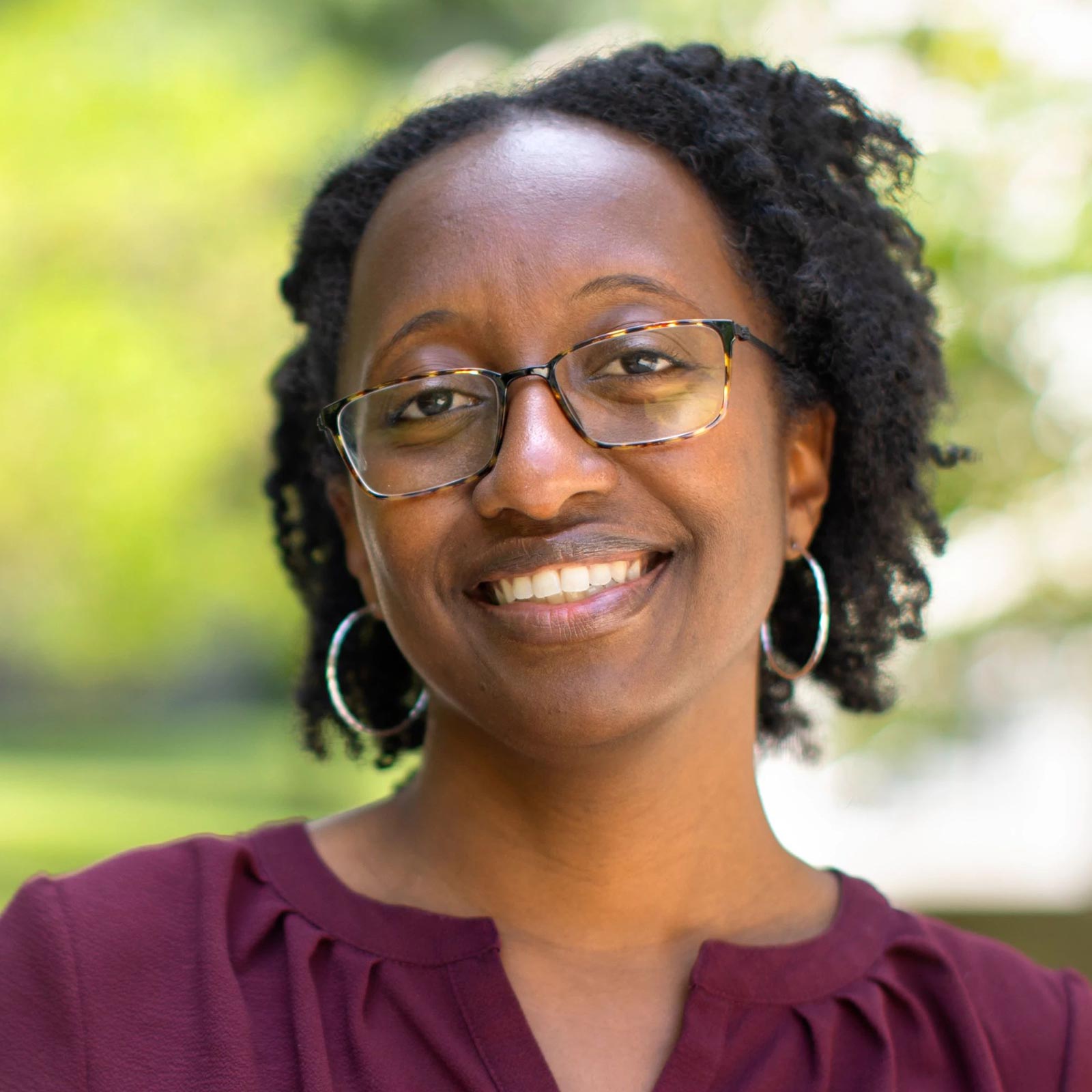
Liz Neeley
Liz Neeley is a founding partner of Liminal, a science communication collective that focuses on sensemaking. She focuses on helping scientists find the courage and language they need to create change within themselves, their institutions, and the world.
Jamila Michener
Jamila Michener, Professor of Government and Public Policy, is the inaugural director of the Center for Racial Justice and Equitable Futures.

Neil Lewis Jr.
Neil Lewis Jr, Associate Professor of Communication, Medicine, and Public Policy, is the inaugural associate director of the Center for Racial Justice and Equitable Futures.